Taxation and Economic Development in Free Cities
Free Cities compete for residents and capital the way companies compete for customers. That makes their tax regimes, regulatory burden and monetary choices central to whether they succeed.
The revenue side looks less like national taxation than like a bill. Where a state taxes what it can reach, an operator charges for what it delivers, and the people paying are free to leave. That changes the design problem: rates get capped in writing, land rent does work that income tax does elsewhere, and the figure that matters is what the place costs to run rather than how much can be extracted from it.
Here you will find the economic thinking behind low-tax jurisdictions, special economic zones, sound-money experiments and the broader argument that governance improves when jurisdictions compete.
Also covers: Taxation · Tax · Flat Tax · Tax Residency · Economics · Free Markets · Trade · Business · Currency
How a Free City pays for itself
Nation-states tax income, consumption and capital because those are the flows a sovereign can reach. A city that has to attract its residents starts from the other end: what does this place cost to run, and who will pay that willingly? Three answers recur across the movement.
The first is the flat rate with a ceiling. Próspera’s charter sets an effective income tax of around five per cent on individuals and roughly one per cent on companies, puts the maximum rates in the founding document rather than in an annual budget, and commits to capping total public revenue at 7.5 per cent of the zone’s economy. The second is land. Henry George’s argument that land rent is the one thing worth taxing resurfaces in Próspera’s land value tax and in Estonia’s property tax, which falls on the land and not on the buildings placed upon it. Hong Kong runs the largest version of all: nearly every plot is leased from the government, and selling those leases has helped fund an unusually light tax system since the colony’s founding. The third is the plain fee. The Cayman Islands operate a functioning government with no direct taxation whatsoever, financed by registry, licence and work-permit charges alongside import duties. Ciudad Morazán does the same thing on a single site, where nothing is sold and everything is leased, so the rent simply is the revenue.
Competition as the mechanism
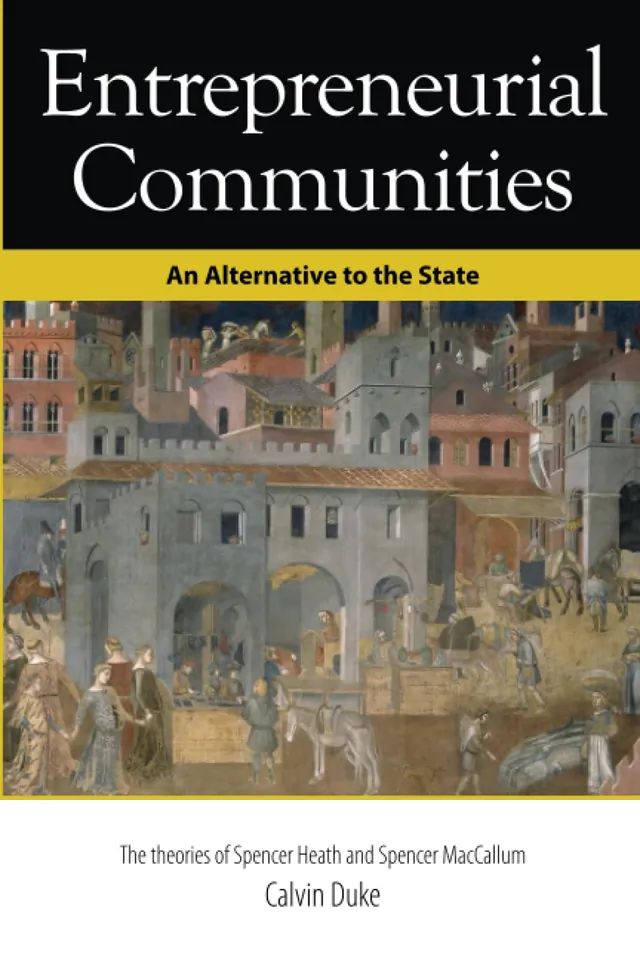
Why any of this should produce better government was set out by Charles Tiebout in 1956. Where many small jurisdictions offer different bundles of services and taxes, and people can move between them, residents reveal what they actually want by choosing, and a government that misprices loses its base. Spencer Heath and Fred Foldvary pushed the argument further with the proprietary community: an owner who supplies the streets, the security and the courts and recovers the cost through ground rent has a direct financial stake in governing well, because bad governance shows up straight away in the value of the land.
Special economic zones are the nearest thing to a natural experiment. UNCTAD counted roughly 5,400 of them across 147 economies in 2019, and the best of them have transformed regions: Shenzhen went from a modest border county in 1980 to one of the largest urban economies in China.
Where the competition happens now
Tax competition is no longer mainly a contest of headline rates. The OECD’s global minimum tax tops large multinationals up to fifteen per cent wherever they book their profits, and automatic exchange of account information has made cross-border financial privacy a thing of the past. What remains is competition on everything else: how quickly a company can be registered, how long a building permit takes, whether the courts work, and whether the rules will still be the same in ten years.
That plays to the Free Cities argument rather than against it. A jurisdiction whose only offer was a lower rate has lost its product. The ones with a future can run a city for less and show residents what the money buys. The Foundation has used Carmel, Indiana as a benchmark for what that might look like in practice, at roughly $1,370 per resident per year, around half what comparable American cities spend, achieved through design and coherence rather than through any special legal status.
Articles
Blog26 min read
The Autonomous Upside: Autonomous Cities Investment Thesis
In 1965, Singapore was a swampy island with a gross domestic product (GDP) per capita of roughly $500, mass unemployment at 14 percent, and half its population illiterate.
 Alex Voss · Free Cities Foundation
News4 min read
Free Cities Updates: 235 Territories Ranked for Freedom, early bird tickets, Indiana.
This edition covers a new freedom index featuring 235 global territories, explains why $1,370 per year might be the per person governance cost a city should aim for, and highlights our new podcast episode taking a deep dive into the…
 Free Cities Foundation Team
Blog11 min read
Quadratic Voting, Quadratic Finance & Free Cities
Intentional communities, planned developments, and new city projects share a common challenge: how do you fairly decide which shared infrastructure to build, and how do you pay for it? Whether the community is an off-grid village, a…
Alex Voss · Free Cities Foundation
Blog9 min read
Why The EU Needs Special Economic Zones to Unlock Its Digital Future
Disclaimer: The following article was written by an external author. The opinions expressed in it do not necessarily reflect the opinions of the Foundation or its members.
 Mariana Carmona
Blog4 min read
The World Needs More Free Cities (The Economic Argument)
Though we live in the world of nation-states today, this was not always the case. In fact, the modern nation-state is a fairly recent invention. For most of recorded history, the world was ruled by a slew of differently structured powers and systems. One of those models, surprisingly common throughout all this time, was the city-state.
 Hynek Fencl · Free Cities Foundation
Academic31 min read
Free Private Cities: A Market-Oriented Solution to the Problems of Government Intervention
Free Private Cities (FPCs) are a new model of governance in which a purely private, investor-owned company provides the services of a State in a city-sized area. Free Private Cities attempt to provide Governance-as-a-Service (GAAS) by treating the relationship with residents as that between a service provider and a consumer rather than ruler and subject. The key characteristics of FPCs include a contract signed between the consumer and the FSP Operator, consensual taxes and/or fees charged by the Operator to the resident consumer, and the provision of infrastructure including energy, water treatment, roads, security, dispute resolution, and others. This paper first lays out in detail the risks, pitfalls, and negative consequences of government intervention in the economy and then examines the FPC model of governance to determine if it is distinctive enough to avoid the same pitfalls or if it merely represents a form of privatized statehood that suffers from many or most of the flaws of traditional governments.
Alex Voss · Free Cities Foundation
Blog8 min read
Odesa’s Economic Miracle: This 19-Century Free City Holds Lessons for Ukraine’s Recovery
Ukraine’s largest seaport, Odesa, has been making headlines recently — for a grim reason. In the past month alone, Russian drones and missiles have disfigured a fair share of the city’s UNESCO-listed historic centre, including the Orthodox Cathedral, the House of Scientists (the former Counts Tolstoy palace), three museums, and a range of 19th-century mansions. Optimism prevails nevertheless: for the first time since the start of the full-scale invasion in 2022, the city is reopening its beaches.
 Vera Kichanova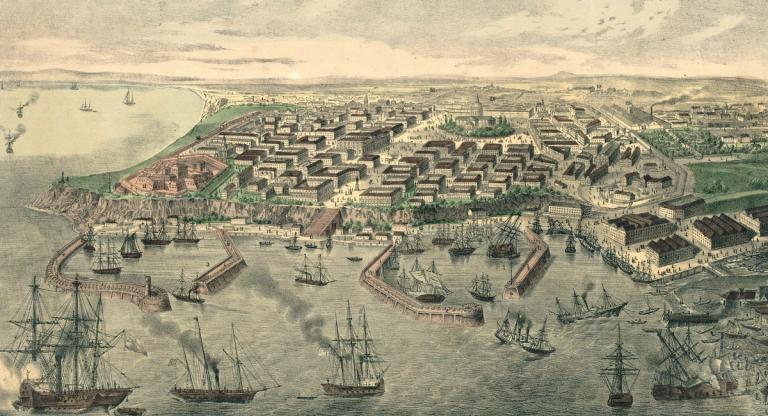
Blog7 min read
Is Hong Kong’s Success Story Coming to an End?
The astonishing development of Hong Kong is an example of how a city-state can work its way up from simple beginnings with a classical liberal system to considerable prosperity and also to enormous size. The population has multiplied (from 7,500 in 1843 to 1.7 million in 1945 to over 7.3 million in 2015), mainly due to immigration from the People’s Republic of China. For many mainland Chinese, the British colony was a refuge from the Chinese Civil War and later the Communist People’s Republic of China. Today, the quality of life and life expectancy, per capita income and business friendliness in Hong Kong are among the world’s best. [1]
 Titus Gebel · Free Cities Foundation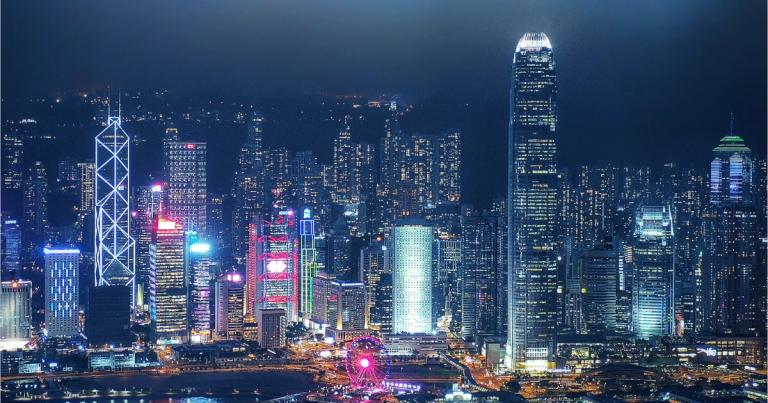


Videos
Free Cities Conference 2025
Free Cities Conference 2025
Free Cities Conference 2025
Free Cities Conference 2025
Free Cities Conference 2025
Free Cities Conference 2025






















Podcast episodes
Podcast Episode 181
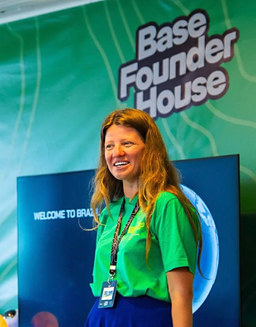
Paloma Lecheta: Brazil’s First Free City
Paloma Lecheta on Jurerê Internacional, the Brazilian neighbourhood privately run since 1980, and the push to make it Brazil's first Free City.
Podcast Episode 171
Lotta Moberg: The Truth About Special Economic Zones
Economist Lotta Moberg on what the world gets wrong about special economic zones, why private ones outperform, and the case for governance by contract.

Podcast Episode 167
Mikkel Thorup: The Global Freedom Map Is Changing
Mikkel Thorup of Expat Money on where real-world freedom is rising or vanishing, territorial tax systems, and why Panama acts as a city-state.

Podcast Episode 166
Christoph Heuermann: You Can Live Tax Free Almost Anywhere
Perpetual traveller Christoph Heuermann on living tax-free, global mobility, exit and Plan B thinking, and why Free Cities may still matter.
Podcast Episode 144
Leon Wankum: The Real Estate Reckoning
Real estate developer Leon Wankum on Austrian economics, why property is a flawed store of value, and how Bitcoin could reshape the financial system.

Podcast Episode 141
Jason Cozens: Why Gold Still Matters in the Digital Age
Glint CEO Jason Cozens on reintroducing gold as everyday money, the harms of inflation and fiat, and the push to reclaim monetary freedom.

Podcast Episode 110
Francisco Litvay: Global Citizenship, 2nd Passports & Geo Arbitrage
Francisco Litvay on second citizenships in Latin America, perpetual travel, flag theory and tax optimization across competing jurisdictions.

Podcast Episode 104
Per Bylund: Economics, Agorism & The Reality of Freedom
Mises Institute economist Per Bylund on agorism, the market process, Bitcoin and whether true freedom is possible under centralized states.










Projects
Intentional CommunityOperational
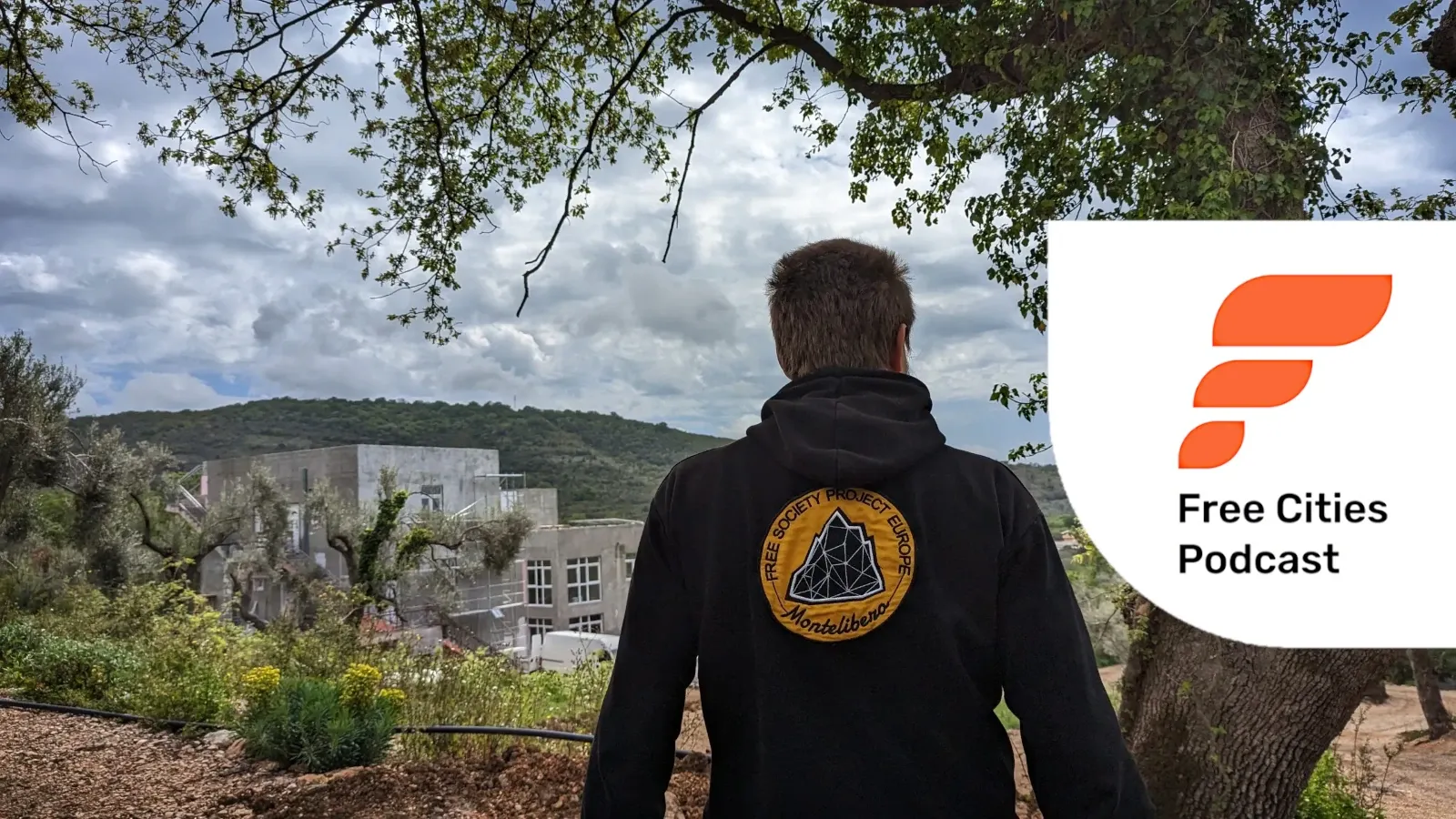
Montelibero
Montelibero is an intentional community of libertarians on the Adriatic coast of Montenegro, founded in 2021 by Russian-speaking liberty advocates and grown international since, with a settlement of its own, MTL City, near the port of Bar.
Montenegro 50–250 residents
Special JurisdictionOperational
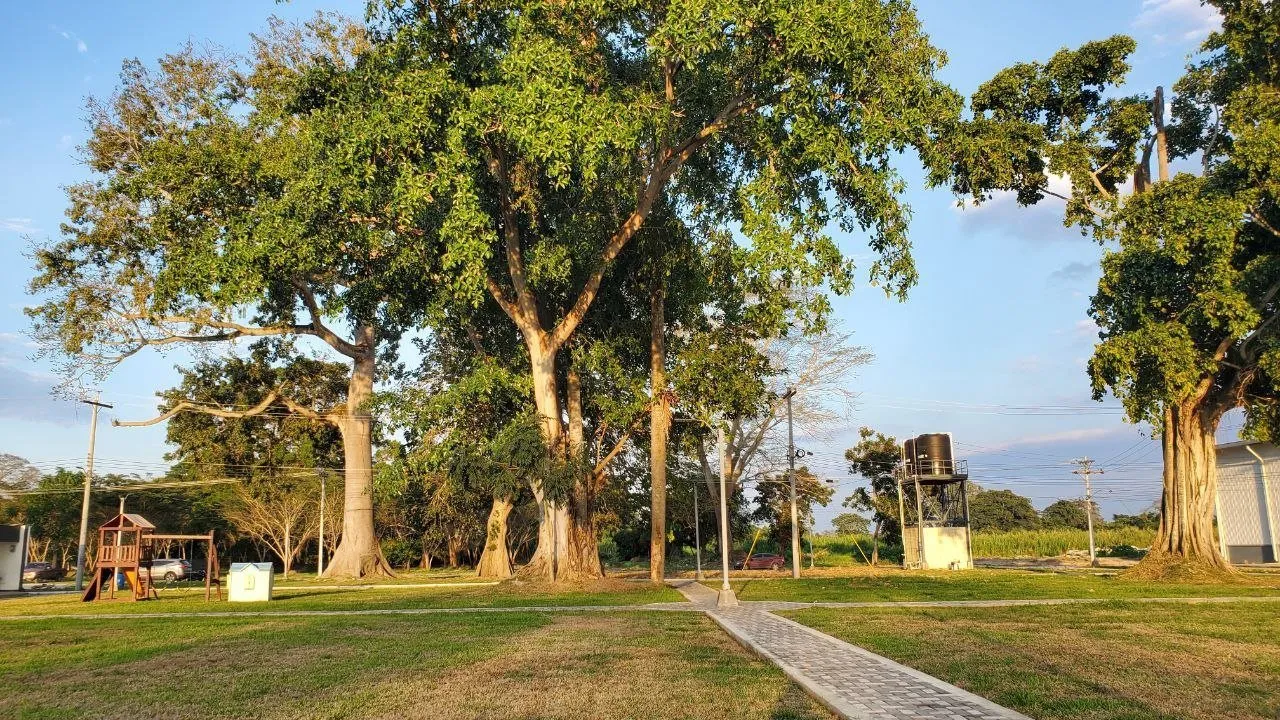
Ciudad Morazán
Ciudad Morazán is a special economic zone on the outskirts of Choloma in northern Honduras: a walled, rental-only town and industrial park built under the ZEDE law for working- and middle-class Hondurans.
Honduras 200–500 residents

Intentional CommunityIn Development
CryptoCity
CryptoCity is an intentional community being built on the south coast of Isla de Margarita, Venezuela: some three hundred plots on forty terraced hectares above a private beach, governed by a vote of its landowners and aimed at German-speaking entrepreneurs and their families.
Venezuela