
Criticism of Free Cities: The Case Against
Any idea worth taking seriously attracts serious objections, and Free Cities have attracted several. They come from constitutional lawyers, development economists, historians of empire and from residents of the countries where these projects are actually built.
This page collects those arguments rather than a rebuttal of them. Where an objection has a persuasive answer, the answer is given. Where it does not, that is said plainly.
Also covers: Criticism · Critique · Crack-Up Capitalism · Objections · Debate · Democratic Legitimacy · Colonialism · Accountability
Consent, and who gets to give it
The central promise of a Free City is that the relationship between resident and government becomes contractual: you agree to the rules before you arrive, and you may leave if they change. The objection is that this only describes the people who arrive. A jurisdiction is also inhabited by those who were already there, by children who never signed anything, and by workers who commute in daily without the standing residents hold. For them the contract is not a choice but a condition of the place they live.
Advocates answer that consent by contract is at least explicit, where the social contract of a nation-state is a fiction nobody ever signed. That is a real argument, but it does not dissolve the objection: a fiction that applies equally is different from a real contract that applies unequally. How a jurisdiction treats the people inside it who are not parties to its founding agreement is a fair test of any such project, and one on which the existing cases differ considerably.
A sharper version of the same answer addresses workers specifically. If someone takes a job in a jurisdiction knowing there is no minimum wage and no welfare state, then calling the result exploitation denies them the standing to judge their own interests, and quietly claims that standing for the person objecting. The Foundation puts it flatly: either adults have the right to decide for themselves, or they do not. Against that, ordinary civil law still guards the weaker party, for instance against surprising terms buried in a contract.
How much force that carries depends on how real the alternative was. Where a job inside the zone is plainly better than what is available outside it, the choice is genuine and the objection is weak. Where the zone is the only employer within reach, consent starts doing less work than the word suggests. That is an empirical question about a specific place rather than a philosophical one, which is also why it cannot be settled in the abstract by either side.
Sovereignty, development and the colonial charge
The sharpest published critique is Quinn Slobodian’s, which reads zones of all kinds as a way of carving economic sovereignty out of poorer states for the benefit of capital that is accountable elsewhere. On this account, an arrangement that lets a foreign operator write the commercial law of a territory is not a new form of governance but an old one under a new name.
The comparison is contested on the facts. Historical colonies were imposed by force and extracted without consent of the host government; host-country agreements are negotiated with governments that can and sometimes do revoke them, as Honduras demonstrated in 2022. On why a state would agree in the first place, the Foundation’s answer is that host states expect to gain: around Hong Kong, Singapore and Monaco a belt of comparatively prosperous territory has formed whose residents often work in the city-state while paying tax at home, and a structurally weak region has little to lose by trying it.
But the underlying asymmetry the critique identifies is real. A small state negotiating with well-resourced international investors is not bargaining between equals. And the same investment-protection clauses the Foundation cites as the reason a host state cannot simply seize a city back are, from the other direction, precisely the mechanism by which a later democratic decision becomes expensive to make. Both descriptions are accurate; which one matters more depends on whether you are more worried about expropriation or about a government being priced out of changing its mind.
Accountability when the operator is the problem
If a city operator provides law and security under contract, what happens when the operator itself is the party at fault? The Foundation answers in two parts. The operator is bound by a contract that confines its powers to a few defined areas and submits it to independent arbitration; a territorial monopoly on force could in principle be abused, but residents would leave and the reputational damage would end any prospect of founding cities elsewhere. The comparison offered is the captain of a cruise ship or the manager of a remote resort, both of whom could behave as dictators and refrain out of commercial self-interest. On enforcement, the position is that this is no worse than international commercial law: whoever holds an award against a state that refuses to pay cannot compel it either, and pursues its assets abroad instead.
Critics point out that arbitration is expensive and slow relative to the resources of an individual resident, that exit is far costlier for someone who has bought a home than for someone who has not, and that the most vulnerable residents are precisely those least able to leave. The cruise-ship comparison also cuts both ways: a passenger is aboard for a week and owns nothing on the vessel, which is exactly what makes leaving cheap enough to discipline the captain.
This is the objection with the least developed answer so far. Competitive pressure works well for customers who are mobile and badly for those who are not, and no operating Free City has yet been through a genuine, public confrontation with its own residents that would show how the mechanism holds up.
What the record actually shows
The most deflationary criticism is not philosophical but empirical. There are more than 7,000 special economic zones worldwide, and the development literature on them is mixed at best: many underperform, some function mainly as tax arbitrage, and the handful of famous successes are cited so often precisely because they are unusual. Extrapolating from Shenzhen or Dubai risks selecting on the outcome.
The honest position is that the modern Free City has a very short and very small record. The projects that go furthest toward genuine legal autonomy are barely a decade old, count residents in the thousands, and have not yet faced a recession, a succession crisis or a hostile host government at scale. Anyone claiming to know how this ends, in either direction, is ahead of the evidence.
Labour, land and the race to the bottom
A jurisdiction that competes for residents and investment also competes on the standards it is willing to lower. Critics in labour and environmental policy argue that this is the mechanism by which zones actually work: not better governance, but cheaper governance, with the costs pushed onto workers who have little bargaining power and onto an environment that has no vote at all. The concern is sharpest where a zone sets its own employment law in a country whose national protections are already weakly enforced.
Land is the second half of this objection, and it is the half most often misread. Every large development project draws opposition from the people living nearest to it, whatever its legal form. A port, a business park, a wind farm and a housing estate all produce the same pattern, and the objection is geographic rather than ideological: it is about what goes up next door, not about who writes the commercial code. Free Cities are not exempt from this, but neither are they a special case of it.
What the campaigns against existing projects do show is how quickly the two arguments merge. Opposition that starts as ordinary local resistance to construction picks up the vocabulary of the sovereignty critique, and criticism of the governance model borrows the moral weight of a neighbourhood dispute. From outside, the result is hard to read: the volume of local opposition says very little about whether the grievance is with a jurisdiction or with a building site. Anyone assessing a project seriously has to separate the two, and the test is simple enough: would this objection still be made if the same development were built under ordinary national law?
What is still open
Three questions have no settled answer: whether a jurisdiction can stay attractive to residents without becoming captured by whoever finances it; whether legal autonomy granted by a government can survive that government changing its mind; and whether the model reaches people who need better governance most, or mainly those who could already afford to move.
On the last of those the Foundation does offer a number: the mandatory basic package of security and courts is estimated at roughly a thousand euros per person per year, or a few thousand once a minimum of social protection is included, with no taxes on top. If that holds, the model is not a rich person’s product. Whether it holds is untested, because no Free City has yet operated at a scale where the fixed costs of running courts, policing and infrastructure are spread across a real population rather than a projection. The Honduran ZEDEs are currently the closest thing to a live test of all three questions.
Articles
Blog6 min read
Conflicted Appreciation: “Crack-Up Capitalism” Book Review
Crack-Up Capitalism, by Canadian historian Quinn Slobodian, takes you on a journey through the history of projects and experiments often related to the Free Cities movement. It delves into attempts at winning autonomy from existing states or even establishing completely new sovereign entities. From Sealand to Somalia to Honduran ZEDEs, the book spans a worldwide array of initiatives, not just current ones but going back over half a century.
 Hynek Fencl · Free Cities Foundation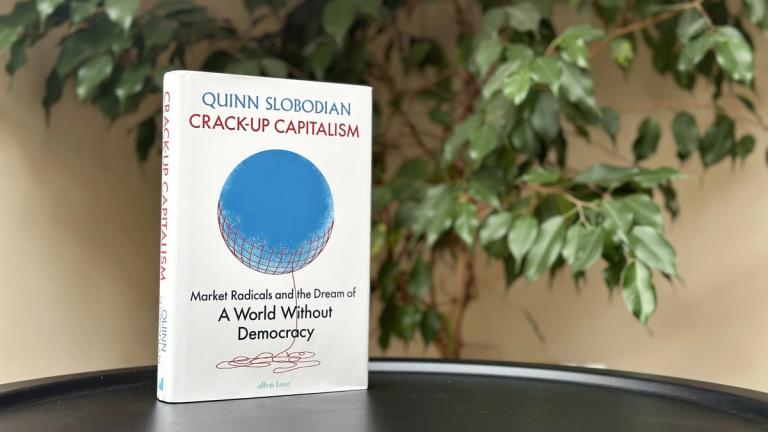
Blog4 min read
Honduran Free Cities vs. Rogue Government
Two of the most autonomous Free Cities in the world are Próspera and Ciudad Morazán in Honduras. As Zones of Employment and Economic Development (called ZEDEs for their Spanish acronym), they have faced fierce opposition from the new Honduran government for the last two years. While this is nothing new, the propaganda against the ZEDEs has increased dramatically in the last few weeks.
 Joyce Brand · Free Cities Foundation
Videos
Doha Debates

Podcast episodes
Podcast Episode 139
Niklas Anzinger: Inside Próspera – A Longtime Resident’s View
Entrepreneur Niklas Anzinger on life inside Próspera, answering critics, building community trust and scaling the Honduran Free City project.

Podcast Episode 109
Alex Ugorji: Life in a Honduran Free City Under Threat
Alex Ugorji, an early Ciudad Morazán resident, on life in a Honduran ZEDE and the legal threat after the repeal of the ZEDE law.



In the media
The New York Times Magazine
The For-Profit City That Might Come Crashing Down
Surplus Magazin
 Deutsch
Privatstadt oder Weltall? Die Flucht der Tech-Milliardäre
Der Freydenker
DeutschFreie Privatstädte – Utopia nur für Reiche oder Rettung für die Armen?
Deutschlandfunk
DeutschUtopie oder Dystopie? Honduras und das Modell der Privatstädte