
Urban Design in New Cities
A Free City is more than its legal framework: it is a physical place that people live in, walk through and call home. How its streets, buildings and public spaces are designed, and who gets to shape them, decides whether a city feels humane and alive or sterile and imposed.
The argument is older than this movement and reaches well beyond it. Jane Jacobs, Christopher Alexander and the New Urbanists were disputing generated against imposed order long before anyone proposed a new jurisdiction to test it in, and the record of purpose-built capitals has given both sides plenty to work with.
This topic gathers the architecture and urbanism running through the Foundation’s work: market-based urban order, human-scale neighbourhoods, the role of beauty, and the case for letting cities evolve from the bottom up rather than be dictated by central planners.
Also covers: Urban Design · Urbanism · Architecture · Urban Planning · City Design · Built Environment · Parametricism · Master Planning · New Urbanism
Order that grows
Jane Jacobs opened the modern argument in 1961 by pointing out that the qualities planners were busy demolishing, density, mixed use, short blocks and old buildings standing next to new ones, were exactly the ones that made a street safe and interesting. Christopher Alexander gave the insight a structure four years later with the observation that a city is not a tree: real settlements are overlapping webs of relationships, and a plan that sorts them into a tidy hierarchy destroys what it set out to organise. His later distinction between generative order, which unfolds step by step under rules, and imposed order, fixed as an image in advance, remains the sharpest framing of the whole debate.
James C. Scott extended it in Seeing Like a State, reading Brasília and Chandigarh as attempts to make a city legible to the authorities at the cost of the local knowledge people use to live in one. Brasília is the case that will not go away. Its pilot plan was sized for around half a million residents and has never exceeded that, while the surrounding Federal District passed two and a half million. The growth went into unplanned settlements the plan had no room for, one of which was known as Cidade Livre, the Free City.
Somebody still has to lay out the streets
Not everything can be left to emerge, though. Streets are the layer that cannot be changed afterwards: buildings turn over every few decades, but the right-of-way and the pattern of plots decide what can be built there for a century. Drainage, sewerage, road hierarchy and public transport are the goods a collection of individual developers reliably undersupplies, because no one of them captures the benefit of getting them right.
The distinction that resolves this is between regulating form and regulating use. The New Urbanists turned Jacobs’ observations into an instrument, the form-based code, which governs the shape of the street and the building line and leaves what happens inside the building alone. That is a far lighter rule than the use-based zoning standard in America since 1926, and it is the version of planning most compatible with a market. Alain Bertaud’s Order Without Design supplies the economist’s case: a city is first of all a labour market, and mobility and affordability are the two things a plan must not break. Tokyo is the working example, where a national framework permits housing almost everywhere and municipalities cannot write themselves out of it.
What the new cities are testing
The Free Cities projects are running two experiments worth watching. Próspera lets a builder choose among recognised international building codes instead of waiting for a local one to be drafted, and issues approvals in weeks. That turns the building code from something imposed into something selected, which is the same move the movement makes with law in general.
Ciudad Morazán near Choloma is the opposite of a showpiece, and the more instructive for it. A compact walkable district of some forty-five hectares built for Honduran factory workers, it sets street widths against how many people there actually own cars rather than against an imported standard, keeps plots small enough for a small trader to take on, and maximises the leasable land so the cost of infrastructure per household stays low. Its designers describe the public role as supplying the initial public goods and then leaving room for the place to grow.
Underneath both lies the same economics. Land value is the scoreboard, since good urbanism shows up as a price premium, and that gives a developer who owns the whole site an incentive an ordinary builder never has. Beauty behaves the same way: no single builder can capture the return on a coherent street, which is why supplying it takes either a covenant, a code or a single landowner. That is the real subject of this topic. Not what to build, but who is entitled to decide.
Articles
Blog7 min read
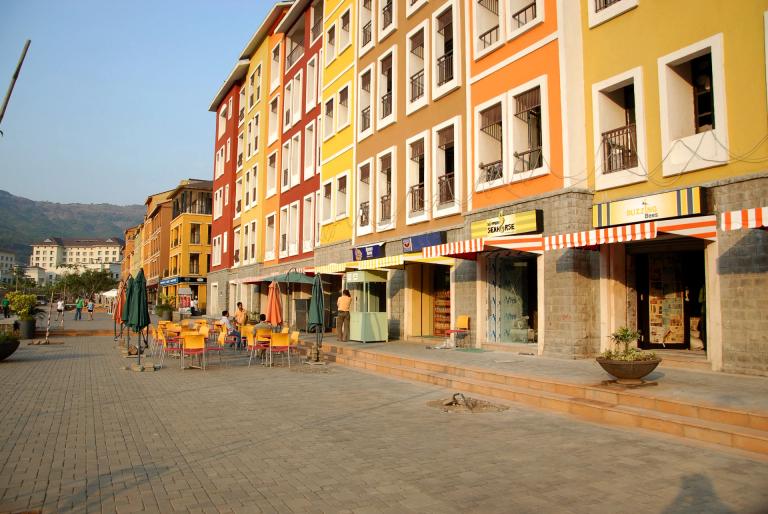
Green, Walkable, Private: An Untold (and Unfinished) Story of Lavasa City
Some 130 miles southeast of Mumbai lies a city you would instead expect to find on the Mediterranean coast. Modelled on the Italian resort of Portofino, with its colourful cottages, cobbled streets, and pristine green slopes, Lavasa is a stark contrast to the roaring, chaotic cities India is notorious for. It claims to be the country’s most sustainable city — and its 2,000 residents can testify to this.
 Vera Kichanova
Blog4 min read
Beauty as Infrastructure: Why Free Cities Should Invest in It Early
If you are building a Free City, a special economic zone, or any new jurisdiction from scratch, here is a piece of advice that sounds frivolous and is not: invest in beauty before you think you can afford to.
 Alex Voss · Free Cities Foundation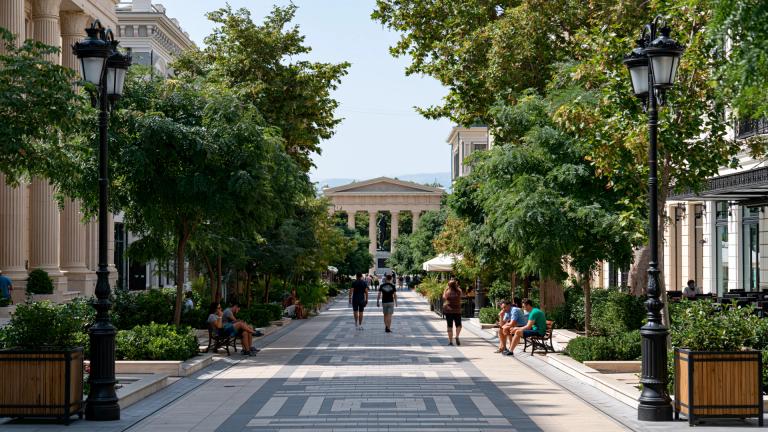
Academic24 min read
The Governance Dividend: The Story of Carmel, Indiana
Most people assume that good governance is expensive. That it demands large bureaucracies, heavy tax burdens, and a government apparatus that grows in perpetuity. Carmel, Indiana suggests they are wrong. What the Carmel experience shows instead is that when a community shares basic norms, when the physical environment is well designed, and when leadership makes deliberate choices about what to build, governance gets cheap. Surprisingly cheap.
Alex Voss · Free Cities Foundation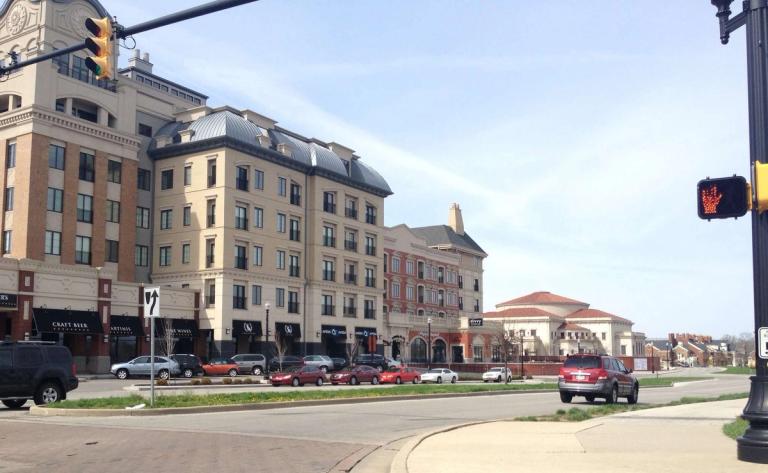
Videos
Liberty in Our Lifetime 2024
Liberty in Our Lifetime 2023
Free Cities Foundation
Free Cities Foundation





Podcast episodes
Podcast Episode 174
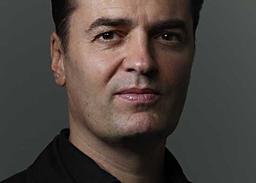
Patrik Schumacher: The Architecture of Spontaneous Order
Architect Patrik Schumacher on parametricism, why the built environment resists markets, and how Free Cities could enable bottom-up urbanism.
Podcast Episode 94
Shajay Bhooshan: Parametric Design, Digital Cities & The Future of Architecture
Zaha Hadid Architects' Shajay Bhooshan on parametric design, digital cities and designing Próspera, Praxis and Liberland's metaverse.

Podcast Episode 80
Patrik Schumacher: Free City Architecture, Synergy Clusters & Próspera
Zaha Hadid Architects' Patrik Schumacher on Free City architecture, special economic zones and designing buildings for Próspera.
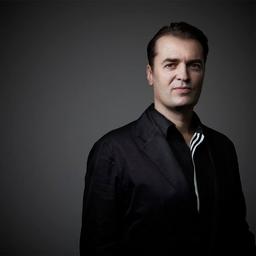
Podcast Episode 56
Marthinus Grobler: Free City Design, Fiat Architecture & New Urbanism
Tipolis chief architect Marthinus Grobler on Free City planning, new urbanism, fiat architecture and the urban design of the Emirates.

Podcast Episode 45
Patrick Lamson-Hall & Nuria Forques: Designing a Free City from Scratch
City planners Patrick Lamson-Hall and Nuria Forques on designing the Honduran ZEDE of Ciudad Morazán, Próspera's blue-collar neighbour.

Podcast Episode 31
Thomas Walker-Werth: Free City Planning, Frontier Governance & Colonising Outer Space
Town planner Thomas Walker-Werth on designing Free Cities, frontier governance and the morality of colonising Mars.





In the media
The Urban Environment and Society – ft Marthinus Grobler and Rahim Taghizadegan
Adventures Guatemala
Paseo Cayala – private city built to escape crime
Neue Zürcher Zeitung
 Deutsch
Auch beim Bauen wird um die richtige moralische Haltung gekämpft
Convent
DeutschStadtentwicklung und Städtebau vor neuen Herausforderungen