
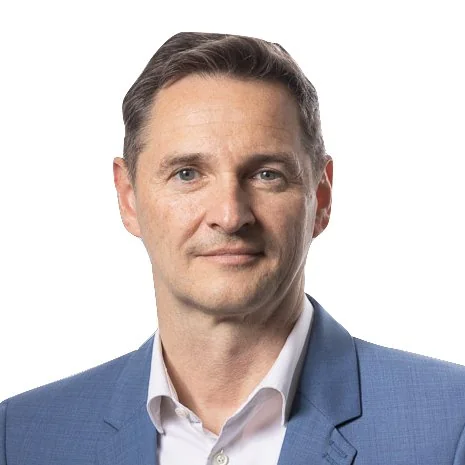


Dr. Titus Gebel is the inventor of the Free Private Cities concept and CEO of Tipolis. He is a serial entrepreneur with a doctorate in law who has founded a number of companies, including the multinational energy and resources group Deutsche Rohstoff AG. In 2014, Titus stepped down as CEO of Deutsche Rohstoff to devote himself entirely to his new project: Free Private Cities.
Titus wants to create an entirely new product in the “market of living together” which aims to fast-track economic and societal progress. At Tipolis, a Singapore-based company, he is focused on creating and developing autonomous cities by partnering commercially with governments and special economic zones around the world. In February 2025 Tipolis signed an agreement with the Brunei Economic Development Board to explore an investment initiative there.
The concept has a book behind it. Free Private Cities: Making Governments Compete for You, published in 2018 and now in a third revised edition, sets the proposition out in full: a private operator supplies law, security and infrastructure, residents pay a fixed contractual fee instead of taxes, disputes go to independent arbitration, and the terms cannot be altered against a resident without their agreement. It is the founding text of the movement in the German-speaking world and has been translated widely since.
He came to it late and from business. He practised law briefly, moved through biotechnology and venture capital, and in 2006 co-founded Deutsche Rohstoff AG with a partner, building it into a Frankfurt-listed mining and energy group with production in Australia and the United States before stepping away to work on cities full time. He has not left the sector behind altogether: he is chairman of Argentina Metals Corp, a copper explorer in Mendoza listed in Toronto, Frankfurt and on the OTCQB since 2026.
He founded the Free Cities Foundation as the non-profit half of the same project, on the reasoning that the idea needed a home that was not a company. In 2025 he received the Roland Baader Award. He read law at Heidelberg and holds a doctorate in international law.
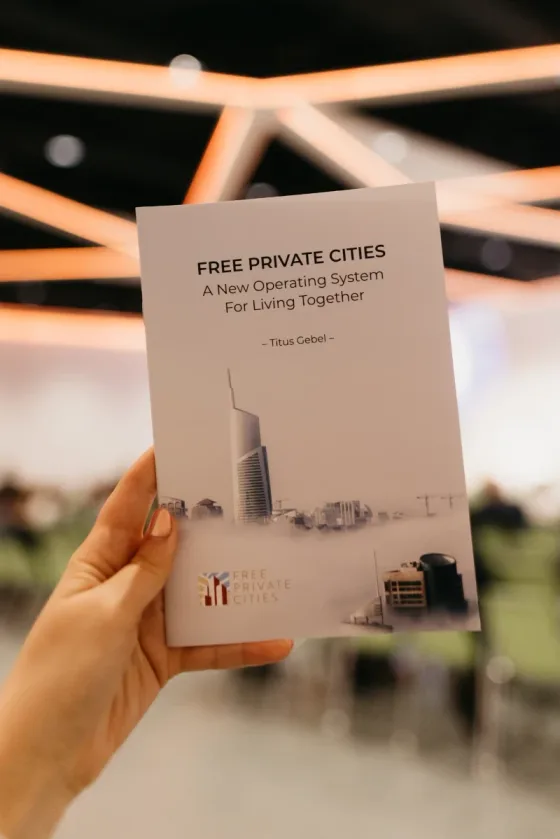 Free DownloadFree Private Cities A New Operating System for Living TogetherIn current political systems, the actions of both rulers and the governed are shaped by wrong incentives. Rulers have no liability and face no economic disadvantage if they make poor decisions. The whitepaper proposes a peaceful and voluntary alternative to the political status quo.Read the Whitepaper
 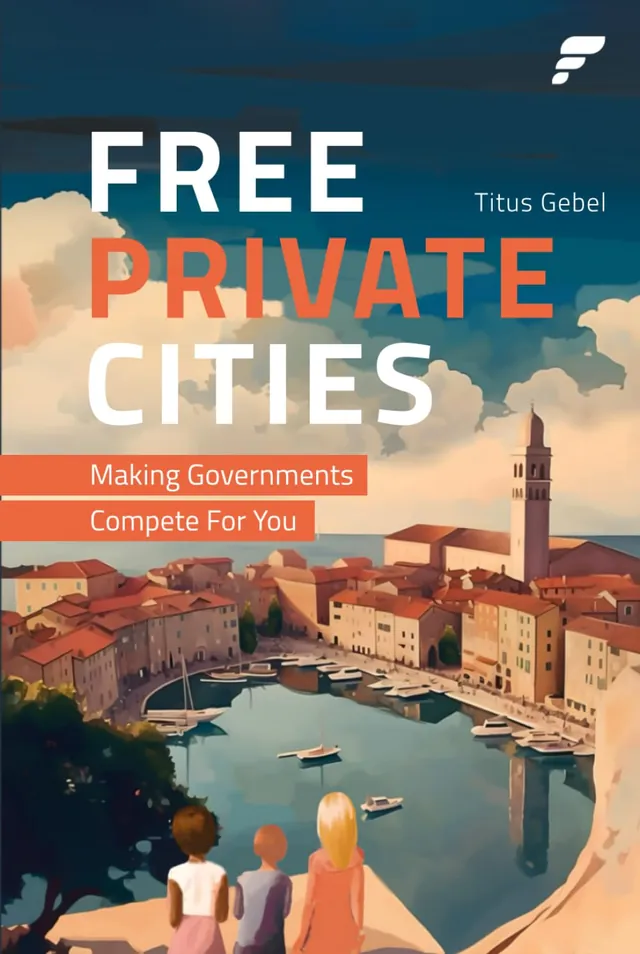 Free Private Cities Making Governments Compete for YouTitus Gebel’s book presents the theoretical framework for creating Free Cities, drawing lessons from past and present autonomous cities and outlining a model for building a Free City in the real world. Free Private Cities represent one of the few non-totalitarian alternatives to the majoritarian political systems adopted by most Western nation-states.More about this book
 Blog14 min read
Surprise! The “End of History” Is Not the End of History – Why We Need Free Private Cities
Speech by Dr. Titus Gebel on the occasion of receiving the Roland Baader Award 14 June 2025.
Blog6 min read
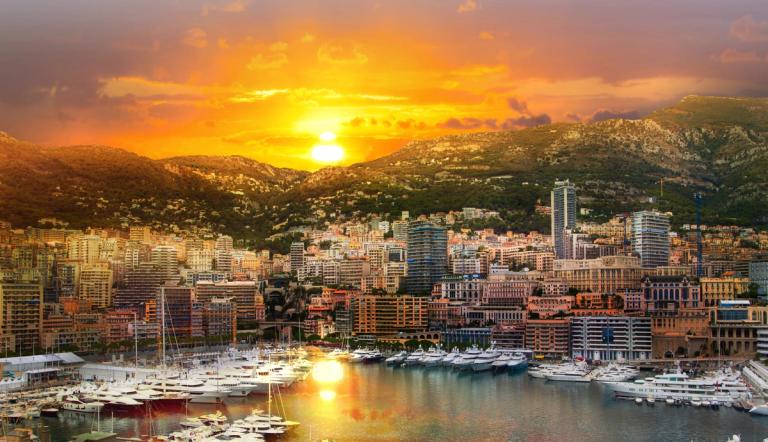
Monaco: A State Owned By A Family
While Venice has lost its independence, another Mediterranean community founded by Genoese noblemen has survived to this day. This is the Principality of Monaco, which can be exemplary for Free Cities in many respects because of its size, its special relationship with France, and its solutions to the issues of security, immigration, and financing of public expenditure. Some claim that Monaco is already a kind of private state that publishes its figures like a stock corporation and regards its inhabitants as customers. [1]
Blog4 min read
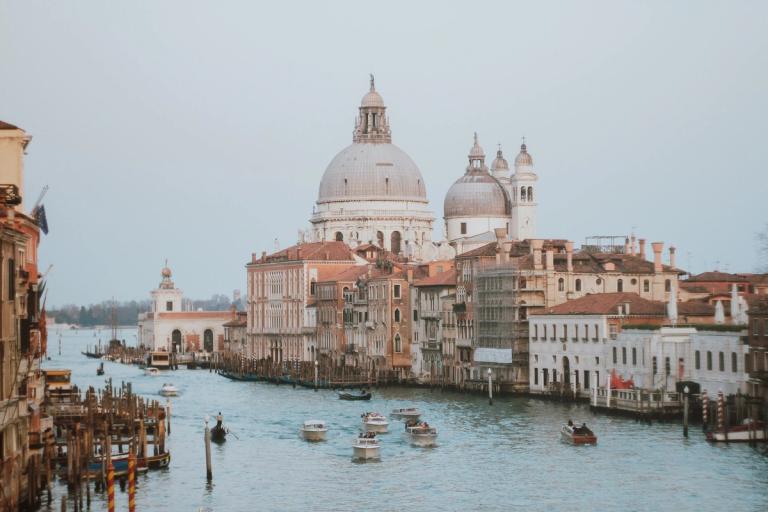
The City-State of Venice: Not a Single Coup in 1100 Years
Particularly successful cities have themselves become independent Great Powers. This applies not only to Genoa but also to Venice, which has been able to retain its independence for over a thousand years. Until 1797, Venice was the capital of the republic of the same name and for a long time one of the largest European cities. Until the 16th century, Venice was one of the world’s most important trading capitals and at times had the largest merchant and war fleet in the world! Despite its own limited resources and relatively small and scattered dominion, Venice was able to play a leading role in the Mediterranean region for a long time. Besides diplomatic skill, this was mainly due to the economic strength of the city, which for centuries had a quasi-monopoly position on trade with the Orient, especially for salt and grain.
Blog7 min read
Is Hong Kong’s Success Story Coming to an End?
The astonishing development of Hong Kong is an example of how a city-state can work its way up from simple beginnings with a classical liberal system to considerable prosperity and also to enormous size. The population has multiplied (from 7,500 in 1843 to 1.7 million in 1945 to over 7.3 million in 2015), mainly due to immigration from the People’s Republic of China. For many mainland Chinese, the British colony was a refuge from the Chinese Civil War and later the Communist People’s Republic of China. Today, the quality of life and life expectancy, per capita income and business friendliness in Hong Kong are among the world’s best. [1]

Academic14 min read
Why a Citizen Contract Is Better than a Constitution
From their state, most people demand – at least – protection of life, liberty and property. In exchange, they are willing to pay for it. So why not put the relationship between citizen and state on a purely contractual basis? Such a Citizen Contract would offer much better protection than any kind of constitution, for a variety of reasons. Firstly, because the contract cannot be changed unilaterally by one side. Constitutions are changed, even against the will of the people concerned, provided there is a respective majority. Secondly, because the Contract Citizens would have a better legal standing. Both sides would be contractual parties on an equal legal footing. As with any other service provider, citizens could sue or withhold payments to the state if they believed that the contract was not being properly fulfilled. Thirdly, because other parties would not be able to interfere with this contractual relationship. Citizens would know that they couldn’t change the content of the contracts of fellow citizens, neither through government nor parliament, and therefore would respect each other’s different views and assessments. The state would eventually morph from having a demigod and uber-father status, to having the status of a mere service provider.

Blog6 min read
More Competition in the World’s Most Important Market
The world is in turmoil. The last year has shown that – even in the West – respect for supposedly secure human rights can be abandoned quickly without objection from the majority. Politicians have developed a taste for the greater power their populations have granted them, and climate lockdowns are already being announced. Do we have a chance to escape from the consequences of these developments? Is real freedom still possible in our lifetime or is an increasingly monitored and totalitarian world inevitable? Are alternative societies with greater freedom and a “live and let live” attitude feasible?

News1 min read
Let’s Build a City Together: An Open Letter to All Billionaires
Ladies and Gentlemen of means,

Blog3 min read
The Vicious Circle of Politics
Why are democracies repeatedly getting into trouble after a certain time? That was already the case with the ancient Greeks. In principle, this is due to the minimal principle:


Free Cities Conference 2026
Doha Debates
Free Cities Conference 2025
Free Cities Conference 2025
Free Cities Conference 2025
Free Cities Conference 2025






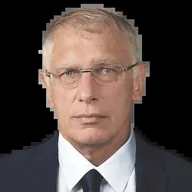
Podcast Episode 50
Titus Gebel: Free Private Cities Book Update
Titus Gebel on the new edition of his book Free Private Cities, what's changed since 2018, and Free City culture, design and ethics.
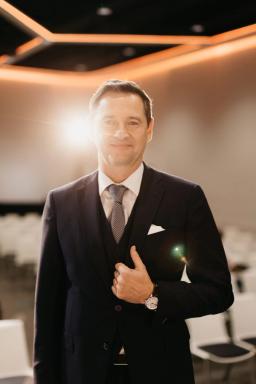
Podcast Episode 36
Titus Gebel: Medieval City-States
Titus Gebel on medieval city-states, the rise and fall of the free imperial cities and the lessons they hold for modern Free Cities.
Podcast Episode 34
Titus Gebel: Breaking the Political Cycle
FCF founder Titus Gebel on breaking the political cycle, the history of city-state models and his vision of government as a service.

Rückbesinnung auf die örtliche Gemeinschaft
Der Sandwirt
Wer Machtmissbrauch verhindern will, muss die Macht begrenzen
Schweizer Monat
Der einzige Ausweg: Parallelstrukturen schaffen
Der Sandwirt
Mehr Wettbewerb im wichtigsten Markt der Welt
MisesDE
Free Private Cities – there is an alternative
The Daily Telegraph
Freie Privatstädte als Weiterentwicklung von Sonderwirtschaftszonen
MisesDE
So klappt es vielleicht doch noch mit dem Liberalismus
Achgut
Wir müssen offensiv am Neuen bauen
Schweizer Monat
Honduras: Es geht los!
MisesDE
Coronavirus – Was würde eine freie Privatstadt tun?
MisesDE