
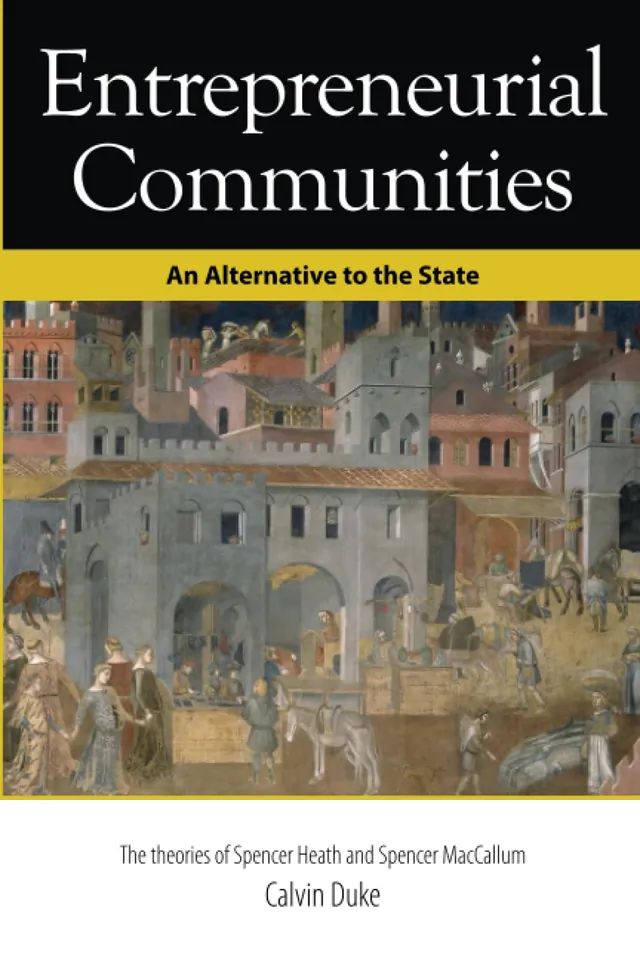
What if there was a better way to organize society, one that didn’t rely on taxation and self-serving political parties? Calvin Duke introduces the little known social thinkers Spencer Heath and Spencer MacCallum and explores current successful examples of their radical ideas. The entrepreneurial community is the governance model chosen for the Honduran Free City Ciudad Morazán.
Entrepreneurial communities, or entrecomms, are privately owned communities that earn their revenue through rental and lease agreements rather than taxation. Duke presents them as a natural way to organize a free society and an efficient means of providing what economists call public goods.
First published in 2020 and reissued in a revised edition in 2023, the book lays out the entrecomm concept in both theory and practice, drawing on real-world examples of communities that already operate this way.

Calvin Duke
Author
Calvin Duke is the author of Entrepreneurial Communities, which asks whether society can be organised without taxation or self-serving political parties.
The book introduces the little-known social thinkers Spencer Heath and Spencer MacCallum and examines real-world examples of their ideas: the entrepreneurial community is the governance model chosen for the Honduran Free City of Ciudad Morazán.
The full title names its subject, the theories of Spencer Heath and Spencer MacCallum, and the term the book uses for them is entrecomm: a community owned by a single proprietor who leases rather than sells, and therefore has a direct financial interest in the place being well run. Heath noticed that hotels, marinas and shopping centres already work this way, supplying streets, security and utilities without a tax or a vote, and MacCallum extended the argument to settlements.
The book was written under a pseudonym and found its way to the people building. Massimo Mazzone read it before founding Ciudad Morazán and built the zone on the model, which makes this one of the few cases in the movement where a specific book can be traced to a specific city.