

About the project
Próspera is a special economic zone on the island of Roatán, Honduras, created under the country’s ZEDE law: a jurisdiction with its own civil and commercial rules, tax code and arbitration, built to attract entrepreneurs and new industries.
What Próspera is
Próspera is one of Honduras’s Zones for Employment and Economic Development (ZEDEs): a special jurisdiction created under national law that writes its own civil, commercial, labour and environmental rules while remaining part of Honduras, bound by the constitution, criminal law and international treaties. It describes itself as a governance platform where entrepreneurs are “free to build”, and it is the most developed project of its kind anywhere.
It is a public-private partnership. The Próspera ZEDE is a Honduran local-government jurisdiction under the constitution; the platform that runs it is furnished by Honduras Próspera Inc., a company founded by Erick Brimen and backed by investors including Pronomos Capital and, later, Coinbase Ventures. The zone is headed by a Technical Secretary, a Honduran official appointed by the state, and its rules require approval from CAMP, the national committee that oversees the ZEDEs.
Where Próspera is
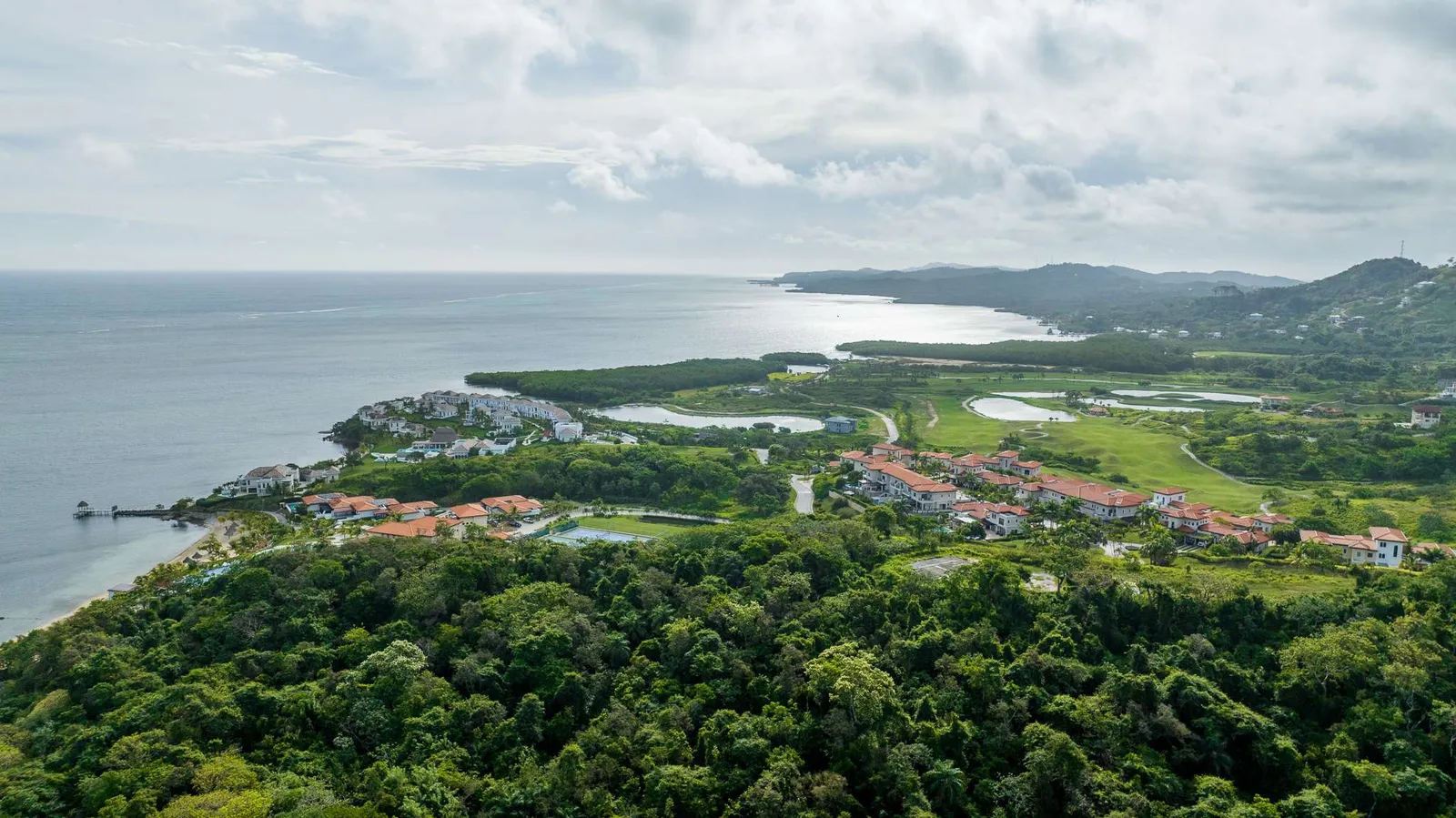
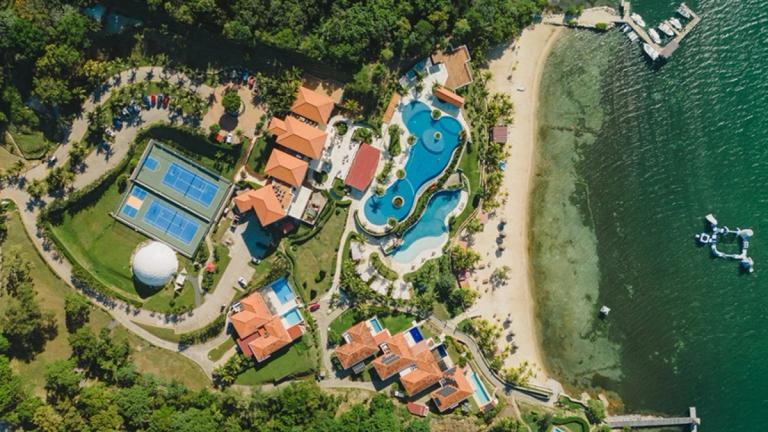
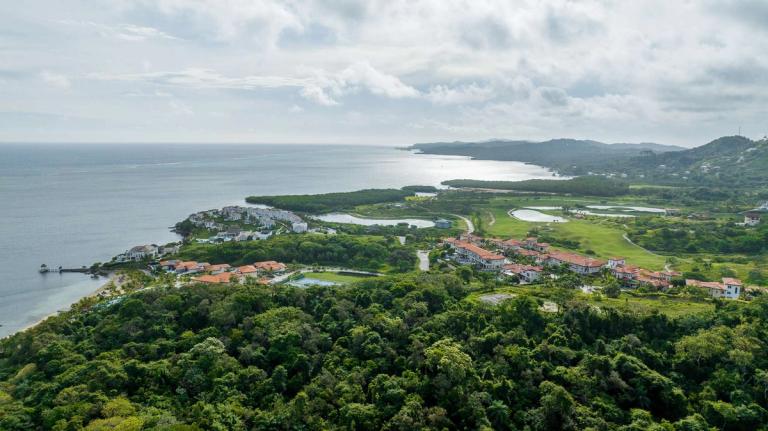
Próspera sits on the west side of Roatán, the largest of Honduras’s Bay Islands, about 65 kilometres off the Caribbean coast and around twenty minutes from Roatán’s international airport, which has direct flights from Miami, Houston, Atlanta, Denver, Toronto and Madrid. Its two districts are a twenty-minute walk apart: the Beta District, the first hillside campus, and Pristine Bay, a beach resort with an eighteen-hole golf course. The jurisdiction also includes a mainland site near La Ceiba, incorporated in 2021 and intended for manufacturing.
The zone started with under five acres in 2017 and grows by consent: land enters Próspera only when its owner chooses to incorporate it, recorded in the public land registry.
How Próspera is governed
Próspera’s legal system is built on common-law foundations, with an unusual choice of regulation: a business may operate under the default common-law liability rules, adopt the regulatory regime of an OECD country such as the United States, Canada, Sweden or the state of Delaware, adopt Próspera’s own best-practice rules, or propose its own, backed by regulatory insurance. Its charter incorporates the U.S. Bill of Rights and prohibits the expropriation of land.
Taxes
The published tax code is short. Personal income tax works out at an effective 5 percent, business income tax at an effective 1 percent of gross revenue, value-added tax at an effective 2.5 percent, and there is a 1 percent tax on the unimproved value of land. There is no capital gains, estate, inheritance, wealth, payroll or gift tax and no import or export duties. Twelve percent of the zone’s taxes and fees go to the Honduran national government, and the charter caps what Próspera may collect at 7.5 percent of its economic output.
Courts and currency
Disputes go by default to the Próspera Arbitration Center, whose roster includes former state supreme court justices from the United States, though parties may agree on other courts. The lempira and the US dollar circulate, and Bitcoin is recognised as an official unit of account in which taxes and fees can be paid.
Living and working in Próspera
Anyone entering the zone signs an Agreement of Coexistence, as the ZEDE law requires. Residency and e-Residency are open to foreigners and Hondurans alike for an annual fee, and a company can be formed online in under a day. By charter, at least 90 percent of employees must be Honduran and wages must exceed the national minimum.
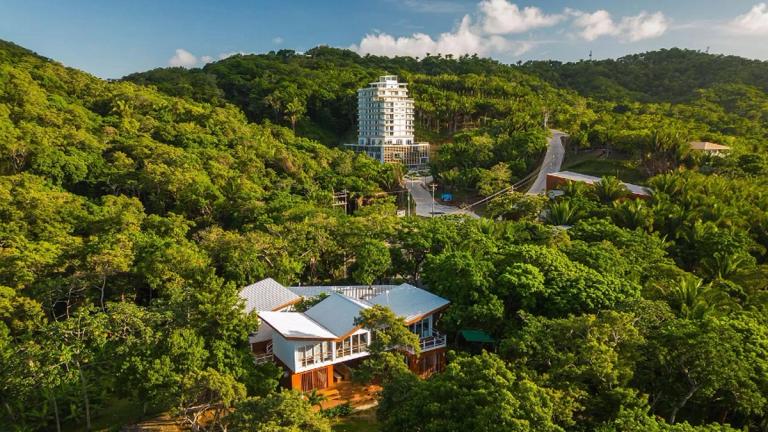
The built environment includes the Duna Residences tower, the tallest building on Roatán, with studios and apartments, coworking and a makerspace; the Beta Building, which houses the arbitration centre; a hotel, beach club and golf course at Pristine Bay; a Montessori school; a clinic; and a Bitcoin centre. The businesses on site cluster in biotechnology and longevity medicine, crypto and fintech, technology and hospitality.
How Próspera came about
Honduras amended its constitution in 2012 and passed the ZEDE Organic Law in 2013 to allow special jurisdictions with their own legal and fiscal systems. Erick Brimen applied for a zone on Roatán in 2017 and Próspera was approved that December; the first residents and businesses arrived in 2020, construction of the Beta District began in 2021, and the e-Residency programme launched the same year.
Legal status
Congress voted to repeal the ZEDE law in April 2022, and in September 2024 the Supreme Court declared the ZEDE constitutional amendments unconstitutional. Próspera continues to operate. It holds a fifty-year legal-stability agreement with the Honduran state, the repeal of the constitutional articles was never ratified by a subsequent legislature as the constitution requires, and the developer points to protections under the Honduras-Kuwait investment treaty and the CAFTA-DR trade agreement. Honduras Próspera Inc. has brought a claim before the World Bank’s ICSID tribunal, and the zone’s Technical Secretary and independent legal opinions have concluded that it may keep operating while the dispute is resolved.
Articles
Blog35 min read
Honduran ZEDEs: Their Past and Future
The ZEDE law in Honduras was repealed in April 2022 and with it, one chapter of the history of innovative governance has come to an end.
 Hynek Fencl · Free Cities Foundation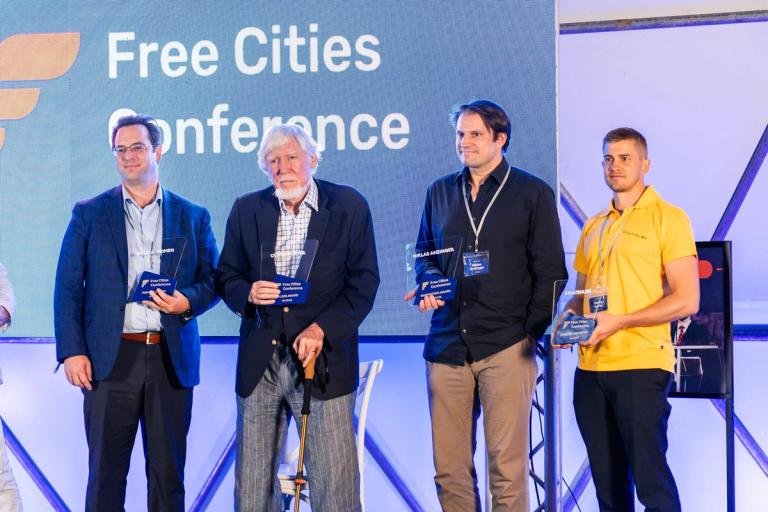
News2 min read
Free Cities Awards 2026: Winners Announced in Próspera, Honduras
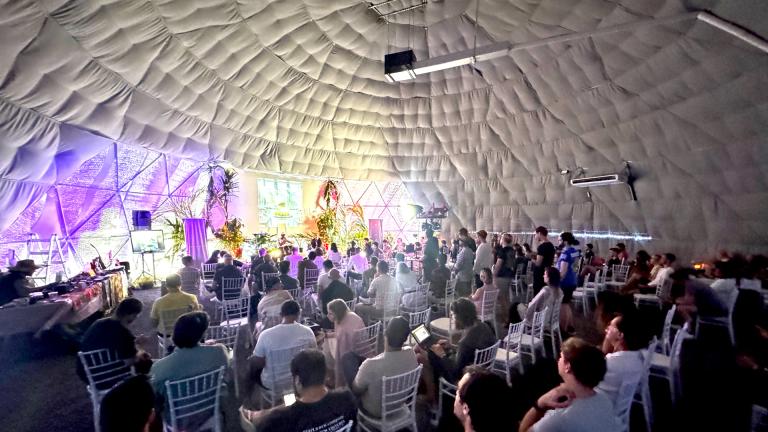
The 2026 Free Cities Awards were presented on September 4 at the Infinita Dome in Próspera, on the second day of the Free Cities Conference. It was the first time the ceremony took place inside a Free City.
 Free Cities Foundation Team
4 min read
Free City Updates: Dubai, Próspera’s flat tax and Destiny
This month, we look at what the Iran war means for Free Cities, cover Próspera’s new $5,000 flat-tax residency program, and report on a bitcoin billionaire’s proposal to pay every citizen of Nevis $100 a month.
4 min read
For years we talked about it. This September we step inside.
Rather than our usual news roundup, we are dedicating this edition to telling you about the 2026 Free Cities Conference.
6 min read
Honduras Election, Grokipedia, Sark & What’s Ahead
As we approach the end of 2025, we bring you an update on the long-anticipated Honduran general election results, Grokipedia’s newly published deep dive into Free Cities, developments on Sark, and more…
3 min read
We’ve Been Waiting Years to Share This…
As many of you know, the Free Cities Conference is the one time each year when our project representatives from around the world come together to share their progress.

35 min read
As ZEDEs de Honduras: Passado e Futuro
A Lei Orgânica das ZEDEs foi revogada em abril de 2022. Três anos depois, a batalha judicial entre as zonas e o governo hondurenho continua aberta.
38 min read
Las ZEDEs de Honduras: Pasado y Futuro
La Ley Orgánica de las ZEDEs fue derogada en abril de 2022. Tres años después, la batalla legal entre las zonas y el gobierno hondureño sigue abierta.
25 min read
Die ZEDEs in Honduras: Vergangenheit und Zukunft
Das ZEDE-Gesetz in Honduras wurde im April 2022 aufgehoben. Drei Jahre später ist der Rechtsstreit zwischen den Zonen und der Regierung weiter offen.
4 min read
Free Cities News & Updates – December 2024
As 2024 draws to a close, we reflect on a year defined by both exciting progress and notable challenges. From the establishment of new Free City projects to the continued growth of our conference, the momentum has been inspiring.
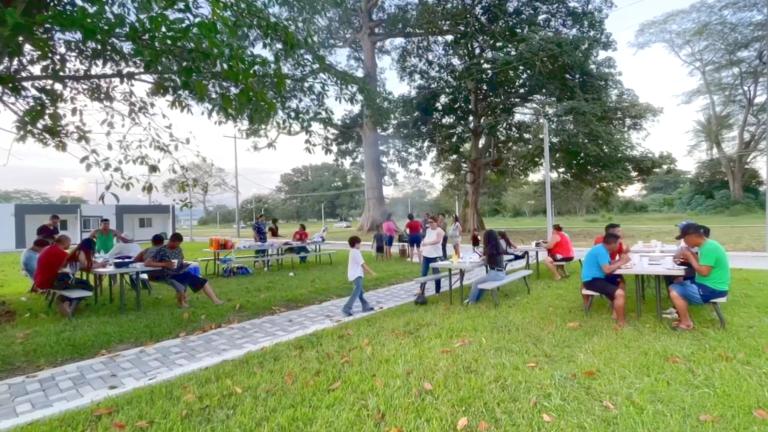
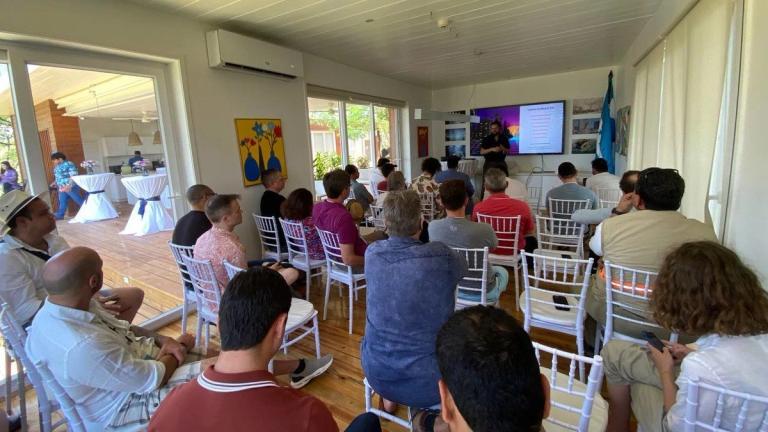
Videos
Free Cities Conference 2026
Free Cities Foundation
Free Cities Conference 2025
Free Cities Conference 2025
Free Cities Conference 2025
Free Cities Online Summit 2025







Podcast episodes
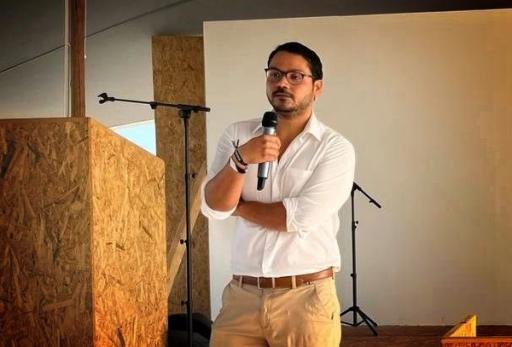
Podcast Episode 195
Christian Betancourt: How to Survive a Hostile Government
Four years ago, Timothy Allen came to Próspera to see whether there was anything actually there. An interview happened on a sofa in a guest house down the…
 HostTimothy AllenFree Cities Foundation
 GuestChristian Betancourt
Podcast Episode 185
Niklas Anzinger: Medicine Without Permission
Niklas Anzinger on putting Próspera on the longevity biotech map, the FDA's limits and an insurance-based alternative to medical regulation.
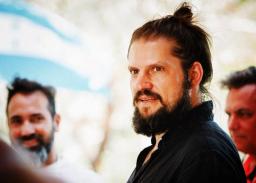
Podcast Episode 183
Tomek Kołodziejczuk: The Bitcoin Free City
Tomek Kołodziejczuk on building a Bitcoin city inside Próspera, the Bitcoin District, and turning Roatán into the world's most Bitcoin-dense island.
Podcast Episode 177
Gabriel Delgado: The Próspera Master Plan
Gabriel Delgado on how Próspera survived a hostile Honduran government, its 50-year legal guarantees, and the master plan for what comes next.
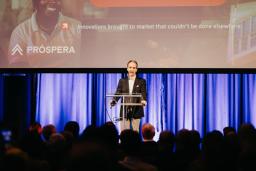
Podcast Episode 162
Vladimir Leshko: You Will Live Forever If You Choose To
Biomedical engineer Vladimir Leshko on gene therapy, longevity, and why Próspera's regulatory framework makes human trials possible.

Podcast Episode 158
Trey Goff: Próspera, Perception, and Post-Scarcity
Trey Goff, chief of staff at Próspera, on the city's real model, pushing back on conspiracy theories, and a legal framework for AI agents.
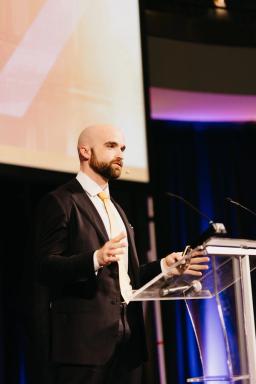
Podcast Episode 139
Niklas Anzinger: Inside Próspera – A Longtime Resident’s View
Entrepreneur Niklas Anzinger on life inside Próspera, answering critics, building community trust and scaling the Honduran Free City project.
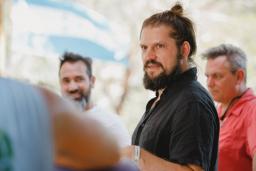
Podcast Episode 130
Gonçalo Hall: Why Most Digital Nomads Have Never Heard of Próspera
Digital nomad pioneer Gonçalo Hall on building nomad villages and why Próspera in Honduras faces a public relations problem.
Podcast Episode 126
Mark Edge: The Arc of History Bends Towards Freedom
Libertarian voice Mark Edge on the Free Cities movement, his connection to Próspera and the balance between individual rights and state power.










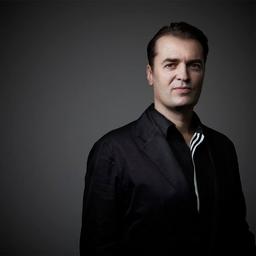


Worth a watch
Videos and articles from around the web, made by others rather than the Free Cities Foundation. Each one plays here, and the pill on it opens the original.
ReasonTV
A private libertarian city in Honduras
Reason’s on-the-ground report on the charter-city experiment taking shape on Roatán.
Yes Theory
Inside the “Illegal” Billionaire Paradise with its Own Laws
The popular travel channel visits Próspera to see what life inside the zone is really like.
Business Insider
Inside The Mysterious Bitcoin City Billionaires Are Pouring Money Into
A business-press account of the investment flowing into the zone, its low corporate taxes and the Bitcoin economy that has grown up around it.
Shin Fujiyama
I entered Prospera ZEDE: Millionaires’ utopia or dangerous experiment in Honduras?
A YouTuber who lives and works in Honduras goes inside the zone and weighs what it offers the country against the objections to it.
In the press
Inside Próspera, the libertarian utopia on a Caribbean island off the coast of Honduras
ABC News (Australia)
How Do You Build a New Singapore? Inside Próspera's Bet on Private Governance
The Generalist
Inside the libertarian charter city of Próspera
Spear's
Próspera, Honduras' Libertarian Island Dream, Becomes $11 Billion Nightmare
Bloomberg
The For-Profit City That Might Come Crashing Down
The New York Times Magazine
A Private Libertarian City in Honduras
Reason
Crypto-libertarian paradise, Próspera, just lost its battle with Honduras
Rest of World
How Erick Brimen Helped Launch a Honduran Charter City
Reason
Prospectus On Próspera
Astral Codex Ten
Prospera in Honduras: A Private Tech City Now Open for Business
Bloomberg CityLab
Questions
Where is Próspera?
On the west side of Roatán, the largest of Honduras’s Bay Islands, about twenty minutes from the island’s international airport. It has two districts, the Beta District and Pristine Bay, plus a mainland site near La Ceiba.
What is Próspera ZEDE?
A Zone for Employment and Economic Development, the Honduran legal form for a special jurisdiction with its own civil law, taxes and courts inside the country. Próspera is the most developed of the three ZEDEs.
Is Próspera legal, and is it part of Honduras?
Yes to both. Próspera remains part of Honduras, bound by its constitution and criminal law. Congress repealed the ZEDE law in 2022 and the Supreme Court ruled against the ZEDE amendments in 2024, but the zone operates under a fifty-year legal-stability agreement and treaty protections, and the dispute is before an international tribunal.
What is a ZEDE?
A Zone for Employment and Economic Development, in Spanish Zona de Empleo y Desarrollo Económico: a Honduran legal form, created by constitutional amendment in 2012 and organic law in 2013, under which a jurisdiction writes its own civil, commercial, labour and fiscal rules while remaining part of Honduras and bound by its constitution, criminal law and treaties. Three have been approved, and two of them are places to live: Próspera on the island of Roatán and Ciudad Morazán near Choloma.
What taxes does Próspera charge?
An effective 5 percent income tax for individuals, 1 percent of gross revenue for businesses, 2.5 percent value-added tax and a 1 percent land-value tax, with no capital gains, inheritance, payroll or gift taxes. Twelve percent of its revenue goes to the Honduran government.
Can I live in Próspera?
Yes. Residency is open to foreigners and Hondurans for an annual fee, e-Residency lets you form and run a company without living there, and everyone signs an Agreement of Coexistence. Housing ranges from the Duna Residences tower to resort villas; the zone publishes its own listings.
What is the cost of living in Próspera?
Prices follow Roatán’s tourism economy rather than the Honduran mainland: housing in the zone is let in US dollars by the night or the month, and most goods are imported to the island. Próspera publishes current rents and prices on its own site.