
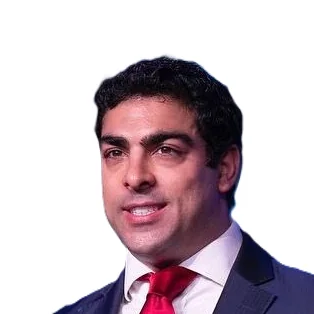

Derek Khanna is an American attorney working on technology policy. He is acting ZEDE Manager of Próspera, the special jurisdiction on Roatán, and was previously deputy general counsel of Honduras Próspera Inc.; he describes the role as bridging the legal architecture of the zone with its day to day administration. He has advised technology startups and served on their boards.
He took a degree in political science at the University of Massachusetts Amherst and a Juris Doctor at Georgetown Law, worked on both of Mitt Romney’s presidential campaigns, and was executive director of the College Republicans for the Massachusetts Republican Party. He worked in the office of Senator Scott Brown from 2010 to 2012 on technology issues, including the protests against the Stop Online Piracy Act, then joined the staff of the House Republican Study Committee, where he handled technology, defense and government oversight policy.
On 16 November 2012 the committee published his policy brief, Three Myths about Copyright Law and Where to Start to Fix it, which argued that copyright terms had grown too long, that penalties for infringement should be lighter and that fair use should be wider. The committee withdrew the paper within a day after objections from copyright industry groups, and Khanna lost his job weeks later. The memo went on circulating, and he set out his own account of the episode in the Cardozo Law Review’s arts and entertainment journal and in a chapter of Hacking Politics.
In January 2013, after the Librarian of Congress ruled that unlocking a mobile phone for use on another carrier violated the Digital Millennium Copyright Act, Khanna started a campaign to reverse it. With the entrepreneur Sina Khanifar he filed a White House petition that gathered 114,322 signatures within a month, the first to pass the 100,000 threshold. Congress then passed the Unlocking Consumer Choice and Wireless Competition Act, signed into law on 1 August 2014, and Forbes placed him on its 30 Under 30 list for law and policy that year. He joined the Information Society Project at Yale Law School as a visiting fellow, practised at the law firm Fenwick and West, and has written for the Washington Post, the Guardian, the Atlantic, National Review, Slate, Reason and TechCrunch.