
About the project
Sark is a small self-governing island in the English Channel, part of the Bailiwick of Guernsey and a Crown Dependency rather than part of the United Kingdom, with its own parliament, its own tax system and no cars.
What Sark is
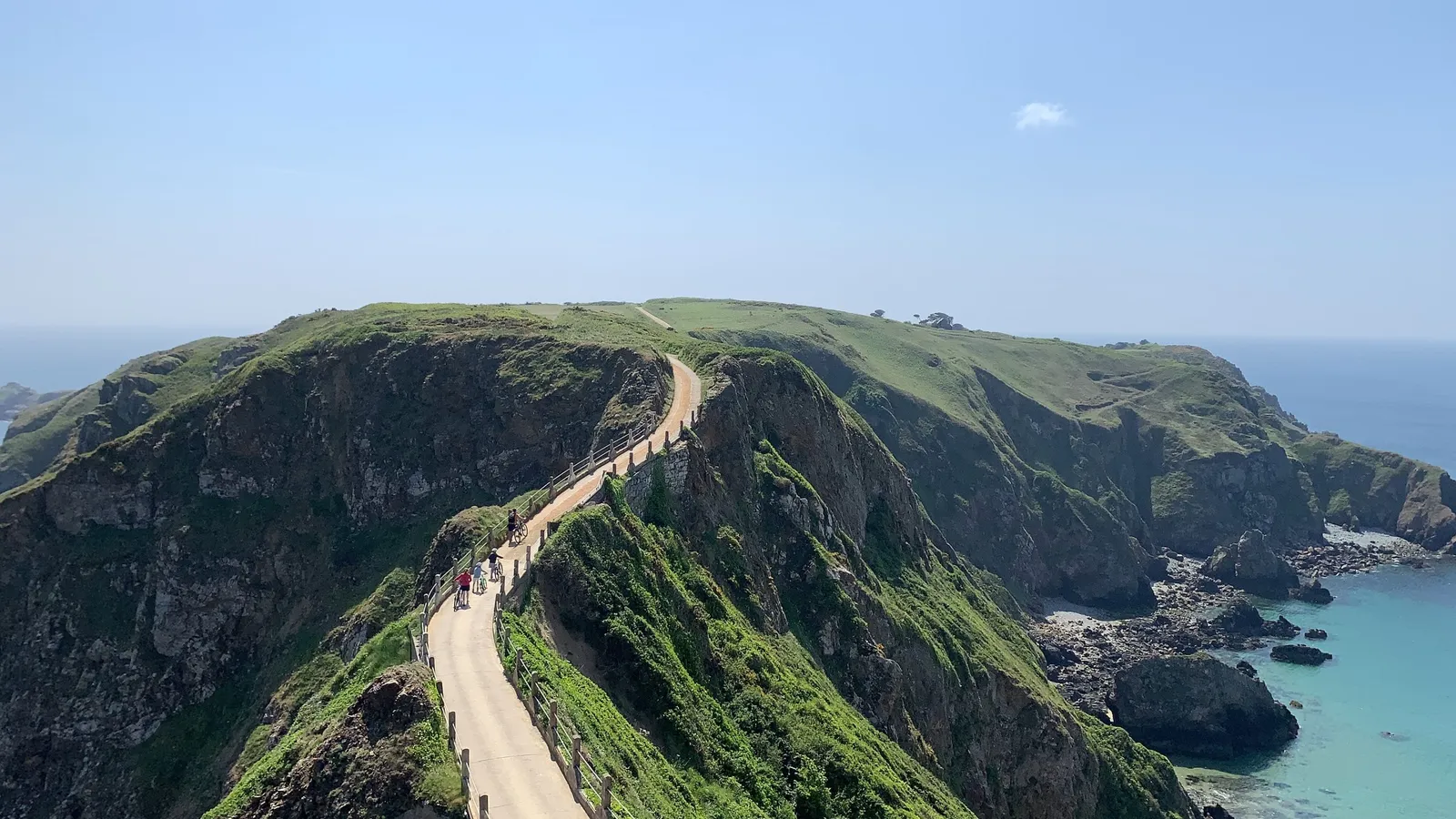
Sark is one of the Channel Islands and one of the smallest self-governing territories in the world. It belongs to the Bailiwick of Guernsey, a British Crown Dependency, which makes it a possession of the Crown rather than part of the United Kingdom or the European Union, with its own parliament, the Chief Pleas, and its own body of law. Cars are banned, and in 2011 it became the world’s first Dark Sky Island.
Where Sark is
The island lies in the south-western English Channel off the coast of Normandy and covers about 5.4 square kilometres including the neighbouring island of Brecqhou. There is no airport: the crossing is by ferry from St Peter Port on Guernsey, roughly 55 minutes, and the nearest airports are Guernsey’s and Jersey’s.
How Sark is governed
The Chief Pleas is Sark’s parliament: eighteen elected Conseillers, half of whom stand every two years, with a Speaker and the Seigneur sitting without a vote. The Seigneur holds the island as a fief from the Crown, a title held since 2016 by Christopher Beaumont, the 23rd Seigneur; he may delay primary legislation, but the Chief Pleas can override him by a simple majority. Sark’s laws take effect with Royal Assent through the Privy Council, and the island sets its own budget independently of Guernsey.
Tax
Sark levies no income tax, no capital gains tax, no inheritance tax and no sales tax. Public spending is funded instead by a property tax, a personal capital tax that every adult resident pays within a fixed annual band, duties on alcohol, tobacco and fuel, and a transfer tax on property sales.
Living on Sark
Around five hundred people live on the island year-round, rising to about a thousand in the tourist season. Anyone who is a British citizen or entitled to live in the United Kingdom may move to Sark. Homes built since 1976 are reserved for people with fifteen years’ residence or local family ties, while the older “open market” dwellings can be bought or rented by newcomers without restriction, and residents join the electoral roll after two years.
How Sark came about
The fief of Sark was granted in 1565 by Elizabeth I to Helier de Carteret, on condition that he settle forty armed men there to hold the island against pirates. The tenants of those original holdings sat in the Chief Pleas by right for more than four centuries, which made Sark the last feudal state in Europe, until a new constitution brought the island its first fully democratic elections in 2008.
The plan to renew Sark
The island is also the object of a long-running attempt to renew it, and that effort is much of the reason Sark is listed here alongside projects built from nothing. By 2020 its resident population had fallen to about 360 from some 600 a decade earlier, the average resident was 65 years old, much of the housing stood empty or derelict, and the only supermarket was thought to be close to closing. Swen Lorenz, an investor who had made the island his base in 2017, answered with a manual on how and why to move to Sark: the BBC picked the campaign up within a day, and 120 new residents had registered four months later. He and Christopher Beaumont have argued since, in their talks and interviews, that self-government of this kind is only as durable as the community carrying it.
An investment plan followed, prepared with the Seigneur and his heir Hugh Beaumont and made public in 2023: buy and restore up to £100m of the island’s existing buildings, which they calculated could house about 1,200 people without adding a square foot, and pay for the expert work behind a long-term plan if the island wanted one. The vehicle was the Guernsey-registered Sark Property Company, set up by the two of them with the Seigneur as one of its two directors. Its proposals reached past property to a guarantee that would let a bank write the island’s first mortgages, affordable housing, harbour studies and a seeded emergency fund, and Lorenz proposed listing the company publicly, with a cap on any one holder’s votes so that no investor could buy a jurisdiction. Its £20m cash bid for the Barclay family’s Sark portfolio, about a fifth of the island’s land, was turned down in 2024 over the asking price.
Articles
Blog6 min read
Honduras Election, Grokipedia, Sark & What’s Ahead
As we approach the end of 2025, we bring you an update on the long-anticipated Honduran general election results, Grokipedia’s newly published deep dive into Free Cities, developments on Sark, and more…
 Natalie Danelishen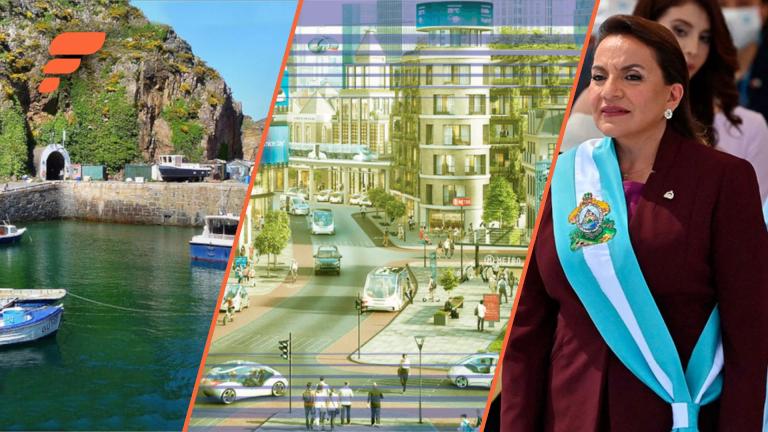
News4 min read
Free Cities News & Updates – December 2024
As 2024 draws to a close, we reflect on a year defined by both exciting progress and notable challenges. From the establishment of new Free City projects to the continued growth of our conference, the momentum has been inspiring.
 Free Cities Foundation Team
Blog29 min read
Sark: A Small Island with Huge Potential
Videos
Liberty in Our Lifetime 2023
Liberty in Our Lifetime 2021
Free Cities Foundation


Podcast episodes
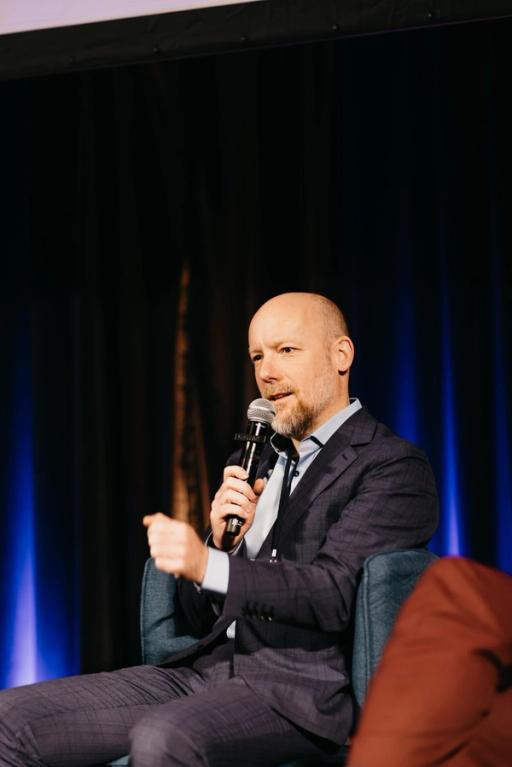
Podcast Episode 161
Swen Lorenz: Demography is Destiny
Swen Lorenz on the troubled state of the island of Sark, a failed rescue bid, and what it reveals about confidence in small jurisdictions.


Podcast Episode 83
Swen Lorenz: Major Sark Announcement
Swen Lorenz of the Sark Property Company on its cash bid for the Sark estate and what the deal means for the island's future.
Podcast Episode 54
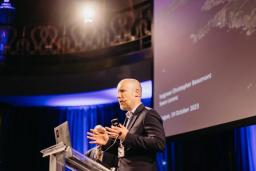
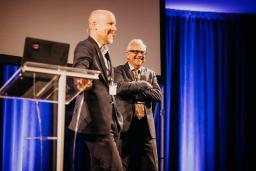
Christopher Beaumont & Swen Lorenz: Sark. Past, Present & Future
Seigneur Christopher Beaumont and Swen Lorenz on the past, present and future of Sark, the self-governing Channel Island near Normandy.
Worth a watch
Videos and articles from around the web, made by others rather than the Free Cities Foundation. Each one plays here, and the pill on it opens the original.
The Wandering Investor
I Visited the World’s Poorest Tax Haven - SARK
A long day on the island with Swen Lorenz, taking in the ferry crossing, the Seigneur, the tax regime and the property market, and asking why so few people move somewhere with no income tax.
ARTE.tv
Sark: A Modern Day Feudal Island
A short documentary on the Channel Island where feudal tenures survived into the modern era and cars are still not allowed.
60 Minutes Australia
Journey to Sark: The ‘time warp’ town stuck in the Middle Ages
A news crew spends time on the island without cars or income tax, and asks residents what daily life there actually looks like.
In the press
Sark – what's next for the little island?
Undervalued Shares
Sark – it's not a big deal
Undervalued Shares
A tiny, tranquil but crumbling island populated by 500 people – how does a £30m investment in Sark make any sense?
Bailiwick Express
Putting the Spark Back in Sark – Swen Lorenz's Big Plans for Europe's Tiniest Tax Haven
IMI Daily
Sark bid – decision time
Undervalued Shares
Sark – bidding for the Barclay estate and going public
Undervalued Shares
Sark – a small island with huge potential
Undervalued Shares
£100m dream for a Sark "utopia"
Bailiwick Express
The Man Who Grew Sark's Population 20% by Wooing Digital Business-Owners With Political Freedom
IMI Daily
Sark population grows by 100 due to one man
Guernsey Press
Questions
Who owns Sark?
No one owns the island outright. The Seigneur, Christopher Beaumont, holds Sark as a fief from the Crown, which is a title and a set of obligations rather than a deed to the land, and the ground itself is in private hands in a pattern that goes back to the forty holdings of 1565. The Barclay family holds about a fifth of the island’s surface, together with the neighbouring island of Brecqhou.
What is the Sark Property Company?
A Guernsey-registered company set up by the investor Swen Lorenz and Christopher Beaumont, the 23rd Seigneur, who is one of its two directors, to buy and restore a large part of Sark’s building stock and to pay for the expert work behind a long-term plan for the island. It was conceived as a perpetual capital vehicle, and more than a hundred investors gave binding commitments to a fundraising of about £35m.
What happened to the bid for the Barclay estate?
The company bid £20m in cash in October 2024 for the Barclay family’s Sark portfolio in one piece, some 80 homes, four hotels, 20 commercial properties and 139 acres, though not Brecqhou. The offer carried no conditions and stood for thirty days. It was turned down at the end of November 2024, the owners’ asking price being higher than the company judged the portfolio to be worth.
Can you buy a house on Sark?
Yes, within limits. Homes built since 1976 are reserved for people with fifteen years’ residence or local family ties, while the older “open market” houses can be bought by anyone. It is a small market and was a cash one for centuries, since lending against land was outlawed in 1611 and mortgages were legalised only in 2021, and several of the Barclay family’s former hotels and houses were listed individually in July 2026.
Can I move to Sark?
Yes, if you are a British citizen or entitled to live in the United Kingdom and can find somewhere to live. There is no income tax, capital gains tax or inheritance tax; residents pay a property tax and a personal capital tax within a fixed band, and may vote after two years. Housing is the real constraint, which is what the repopulation campaign of 2020 and the investment plans since were meant to loosen.
How many people live on Sark?
There were 562 at the 2022 census, and the island’s government puts the resident population at around five hundred, rising to about a thousand in the summer season. The figure is the island’s central question rather than a piece of trivia: it had fallen to about 360 during the 2010s before a campaign to attract new residents turned it round.