
Network States

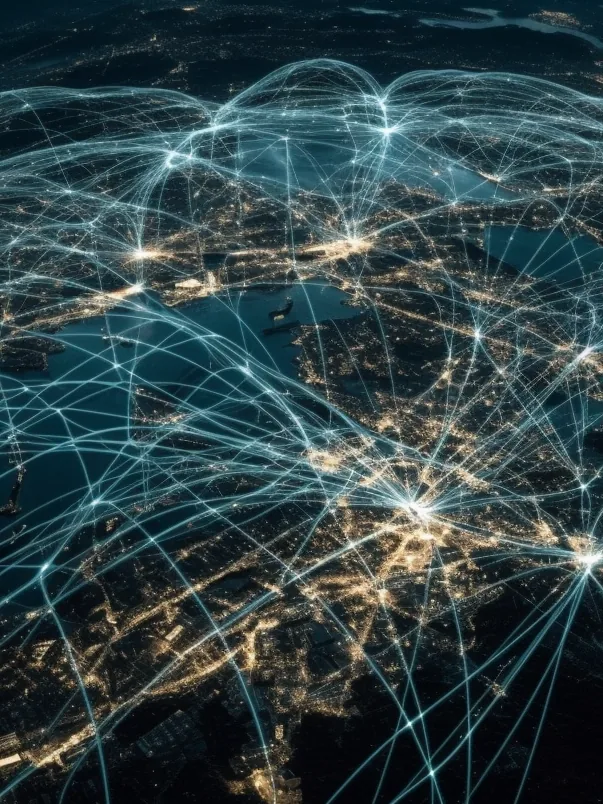
A Network State is an online community that sets out to become a country. It begins on the internet, built around an idea that sets it apart from the world around it, and it develops a culture, an internal economy and a way of making decisions together. Once it has the members and the money, it starts buying property: apartments, houses and whole streets, in several countries at once, connected over the internet instead of by a shared border. The final step is diplomatic recognition from at least one existing government.
Balaji Srinivasan defined the term in his 2022 book The Network State: How to Start a New Country. He argues that the usual ways of founding a country are no longer open. Elections are crowded, revolutions and wars are violent, micronations are ignored, and seasteads and Mars colonies depend on technology nobody has finished building. What is possible today, he says, is to build a large online community first, give it a physical presence later in as many places as it can afford, and negotiate for recognition once the numbers are big enough to take seriously.
Network States sit at the digital end of the Free Cities spectrum. A community that ends up governing its own territory and protecting the rights and freedoms of the people living there is a Free City, whichever route it took to get there. But the model is a method, and it says nothing about what a community stands for. Many startup societies are organised around a diet, a technology or a religion.
Also covers: Network State · Cloud Country · Digital Nation · Startup Society · Network Union · Network Archipelago · Parallel Society
One of the models under the Free Cities umbrella.
Updated
Articles
Blog5 min read
Are Network States Free Cities?
Free Cities are such a new concept that they are still in the process of being defined in practice. As a result, there are many questions about which existing cities, communities, or territories can be called Free Cities. The same question applies to cities, communities, or settlements now being built or planned.
 Joyce Brand · Free Cities Foundation
Blog3 min read
Decentralization Through Voluntary Commitment: The Network State Conference
At the end of last month, I attended Balaji Srinivasan’s Network State Conference in Amsterdam.
 Marthinus Grobler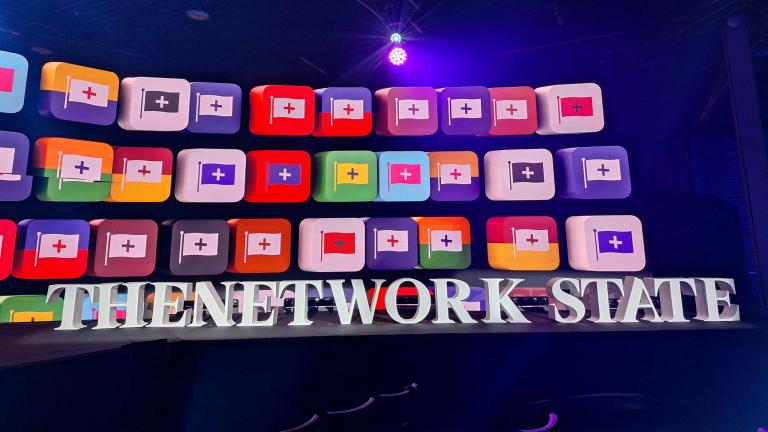
Blog3 min read
Zuzalu: A Pop-up City on the Mediterranean
Last week, the Free Cities Foundation team travelled to Montenegro to take part in Zuzalu: a two-month gathering of entrepreneurs with a shared interest in longevity, blockchain, and new cities.
 Peter Young · Free Cities Foundation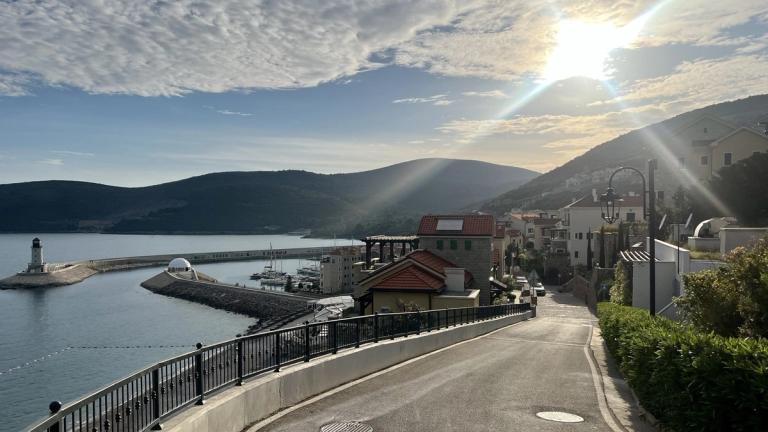
Videos
Liberty in Our Lifetime 2023
Liberty in Our Lifetime 2023

Podcast episodes
Podcast Episode 168
Vikram Bharati: At the Intersection of Free Cities & Network States
Vikram Bharati of Draper Nation on where Free Cities and network states converge, tribal governance, and experimenting with new political models.

Podcast Episode 122
Lauren Razavi: Digital Nomads, Global Mobility & Network States
Plumia's Lauren Razavi on digital nomad visas, global mobility rights and the idea of building a network state country on the internet.

Podcast Episode 99
Dr. David Bovill: Future States, Regenerative Cities & Open Source Law
Dr. David Bovill on network states, regenerative cities, liquid democracy, open-source law and the future of digital self-governance.

Podcast Episode 77
Olivier Roland: The Sovereign Individual, Infopreneurship & Nation-State Disruption
Author Olivier Roland on the Sovereign Individual thesis, infopreneurship, digital nomadism and how the internet disrupts nation-states.

Podcast Episode 23
Kris Kaleta: Manifesting Community
Kris Kaleta on his research into virtual libertarian communities and how online networks are manifesting as Free Cities in real life.




The book that named it
The book is The Network State: How to Start a New Country, published in 2022 by Balaji Srinivasan, an investor and entrepreneur who was chief technology officer of Coinbase and a general partner at Andreessen Horowitz. The full text is free to read and download at thenetworkstate.com, where every section also has a web address of its own.
How one is built
Srinivasan is firm that nobody founds a Network State, in the same way that nobody founds a public company. You found a startup society: an online community with ambitions beyond conversation. Its founder has authority for as long as people choose to follow. What comes after that happens in stages.
The first stage is the network union. The community organises itself to act collectively, with a purpose and a regular call to action. It is not a union set up against an employer. It is a group that can bargain, buy in bulk, place its members in work and fund things together, and that learns to act as one while it still has nothing to lose.
The second stage is the network archipelago. The union starts buying property: an apartment, a few houses, a street, in whichever cities its members already live, connected over the internet. Access is granted by a cryptographic credential instead of a passport stamp. At the same time the community publishes a census that anyone can check, covering how many members it has, what they earn and how much land they own. Srinivasan’s reasoning is that nobody will believe an unverifiable claim about size.
The third stage is recognition. The first government to grant it does not have to be a large one, and Srinivasan calls it the bootstrap recognizer. A city or a province would count. His analogy is bitcoin, which El Salvador made legal tender in 2021, years before larger states stopped dismissing it. He also treats the earlier stages as reasonable places to stop. A network union that never buys a square metre is still a functioning organisation.
Where it stands today
Several experiments have run. Zuzalu was a two-month gathering that Vitalik Buterin convened on the Montenegrin coast in 2023, to test whether a community assembled online would hold together in person, and the pop-up villages that followed have repeated it on other continents. Praxis and Afropolitan have both raised money to build somewhere for a community gathered online first. Cabin runs a network of rural properties for remote workers, which is close to the archipelago idea. The Network State Conference has met every year since Amsterdam in 2023.
Srinivasan has also tried the model himself. The Network School is a residential programme in Astana, Kazakhstan, on the fifth floor of the Astana Hub technology park, for people who want to learn technology, work remotely and get fit in the company of others doing the same. Its own summary of that is Learn, Burn, and Earn. Membership is sold as Society-as-a-Service: an apartment, three meals a day, a gym with classes and trainers, coworking around the clock, wifi and a content studio, alongside a programme of guest talks, tutorials and workshops. Cohorts start on the first of each month and members stay from a month upwards. Applications are reviewed as they arrive.
The school ran in Forest City in Johor, Malaysia before it moved to Astana in 2026. It is one place with a membership, not a state. It is also the closest thing yet to the kind of node the book describes, run by the person who wrote it.
How it differs from the other models
Most of the models covered here start with land and work back to the people. A Special Economic Zone is created by a government that keeps the power to change the terms. A Charter City is granted its own legislation by charter. A Free Private City is negotiated with a host country and then run by an operator under a contract with each resident.
A Network State does it the other way round, and two of its features follow from that. It is spread out because a single site can be surrounded, which is why Srinivasan rules out the city-state as a model. And recognition comes at the end: a Free Private City needs its agreement with a host country before it can start.
It is not a micronation either, though the two are often discussed together. A micronation declares sovereignty first and then looks for a population and for recognition. All these models rest on the same claim: that people should be able to choose the rules they live under by joining, not by winning an election. Whether a particular Network State would count as a Free City depends on what it does with that choice, and Are Network States Free Cities? works through it.
Questions people ask
What is a Network State in plain terms?
An online community that buys property around the world for its members and aims to be recognised as a country by at least one existing government. It is built in the reverse of the usual order: the people come first, then the shared culture, then the territory, and recognition last.
Who invented the concept of the Network State?
Balaji Srinivasan, an American entrepreneur and investor with a doctorate from Stanford, formerly chief technology officer of Coinbase and a general partner at Andreessen Horowitz. He defined the term in The Network State: How to Start a New Country, published in 2022, which also sets out the stages a community would pass through on the way to becoming one.
Where can I read The Network State?
The full text is free to read at thenetworkstate.com, and print and e-book editions are sold in the usual places. Each section of the book has its own web address, so a passage can be linked directly. Our own library is at Books. The nearest title to it in subject is Free Private Cities: Making Governments Compete for You, which makes the land-first case.
Do any Network States exist?
Not by Srinivasan’s definition. No community has been recognised as a state by any government, and recognition is the final clause the rest of the definition leads up to. What exists are startup societies at earlier stages: online communities with a shared purpose, some of which have begun holding gatherings and buying property. Zuzalu in Montenegro in 2023 and the pop-up villages that followed it are the best documented so far.
What are a startup society, a network union and a network archipelago?
They are the stages before a Network State. A startup society is an online community with ambitions beyond conversation. A network union is that community organised to act together, with a purpose and a regular call to action. A network archipelago is a network union that has begun buying property in several places and connecting it over the internet. Srinivasan treats each one as a reasonable place to stop.
How do you start a Network State?
You start a startup society and try to grow it. In practice that means gathering an online community around a specific idea, organising it into a network union that can act collectively, meeting in person while building an internal economy, crowdfunding property in several countries and connecting it, publishing an auditable census of members, income and land, and only then approaching a government about recognition.
What is the difference between a Network State and a Free City?
A Free City is a territory with its own legal framework and a community living under it, and every model this Foundation tracks starts from that territory. A Network State starts with the people and acquires territory later, in pieces, in several countries. The two meet when a Network State puts its property somewhere that writes its own rules. A Network State that governed territory and protected the rights and freedoms of its residents would be a Free City; one organised around anything else would not.
What is the Network School?
A residential programme in Astana, Kazakhstan, run by Balaji Srinivasan, and his own attempt at the model in his book. It is for people who want to learn technology, work remotely and get fit alongside others doing the same, and membership is sold as Society-as-a-Service: an apartment, three meals a day, a gym with classes, coworking around the clock, and a programme of guest talks and workshops. Cohorts start on the first of each month and members stay from a month upwards. Details and applications are at ns.com.