
Blog
Bringing Free Cities to Established (But Stagnating) Democracies, Starting from Britain
 Vera Kichanova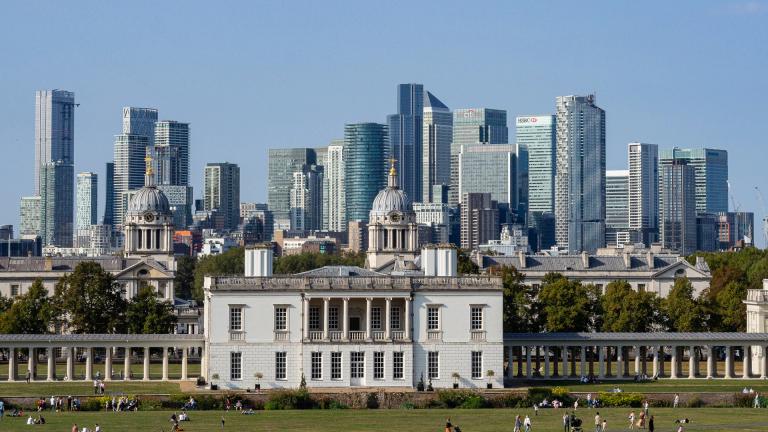
Around the world, a quiet revolution is reshaping how we build and govern cities. From private blockchain in Próspera to the car-free streets of Lavasa, new urban experiments are challenging the old ways — and a growing number of pioneers are voting with their feet. Maybe you’re even browsing the Free Communities Directory right now, wondering where your next home might be.
But what if you’re not ready to move to a tropical island, a farming community, or an off-grid libertarian enclave? What if you’re seasick and can’t imagine life on a seastead? If wrestling with the Croatian police like Liberlanders is not your idea of fun? What if you’d rather live in a place where you can visit a theatre, order your favourite coffee, and sink a pint in a pub older than your grandparents—is there still hope?
Apparently so. And I make that case in my new paper for the Institute of Economic Affairs: Beyond Freeports: Revitalising Britain with Self-Governing Cities.
The truth is, most countries have some framework for special jurisdictions — free zones, freeports, foreign trade zones, you name it. But the problem is, in most cases, these policies are far too tame. In the UK, for that matter, the post-Brexit freeports strategy promised a great revival but, in practice, delivered little beyond bureaucratic relabelling. The policy leaned heavily on reviving “proud industrial heritage” and “levelling up” areas that had “historically missed out” — but it lacked the deregulatory agenda and visionary scope to make a real difference.
And yet, Britain — and other legacy democracies to a varying extent — might be more promising candidates for bold reforms than it appears. Far from being a lost cause, they hold the institutional stability and legal foundations that, if paired with a bit of political courage, could make room for truly transformative experiments.
A discussion about my IEA publication with Hon. Steve Baker, former UK government minister, and Jason Cozens on “The Resilient Compass” podcast
Britain is the country that invented urban self-governance — from the medieval City of London, with its own police force and Lord Mayor, to the privately built model towns of the Industrial Revolution, such as Port Sunlight, Saltaire, and Bournville. It gave rise to Hong Kong’s extraordinary success abroad and transformed derelict docks at home into Canary Wharf — a global financial hub created through exceptional planning autonomy. Today, special zones in Dubai and Qatar adopt English common law to attract investment, and even Próspera in Honduras — the boldest charter city project to date — is grounded in British legal tradition.
Part of what I explore in the IEA paper is how Britain’s legacy of urban self-governance can be reclaimed — not just exported. It’s not about nostalgia; it’s about recognising that Britain’s own toolkit includes the building blocks of a new, decentralised urban renaissance. And while the UK holds a particularly rich tradition in this regard, many of the same principles — from common law to municipal autonomy — can be found, and revived, across other legacy democracies too.
The paper also looks at case studies from across time and continents — from the Hanseatic League to emerging charter cities — showing how decentralised governance has, time and again, unlocked prosperity. Today, self-governing regions are on the rise in emerging markets, often built on shaky foundations. But what if legacy democracies joined the competition too — not by accident, but by design?
Here’s what I call the catch-22 of Free Cities: The places most open to experimentation often lack the institutional stability to support it. Meanwhile, in places with a strong rule of law — like the UK, EU, or Canada — the political space for innovation is narrow. Honduras has room to manoeuvre but not always the institutional credibility to retain investors. Britain has the institutions — democracy, the rule of law, protected property rights — but barely uses them to empower bottom-up innovation.
So how do we break this cycle? The answer is right in front of us: building stable institutions may take centuries, but unleashing creativity doesn’t — it’s the natural state of human society when freed from unnecessary constraints.
My proposal: we start with incremental, locally anchored experiments in self-governance. We identify the legal and regulatory carve-outs that already exist — underused SEZs, land-use flexibility, new towns policy, development corporations — and reimagine them as platforms for competitive governance. The goal isn’t utopia. It’s proof of concept.
One example of where self-governing cities could help is the UK’s chronic housing shortage. A rigid planning system — familiar in many countries — makes it difficult to build homes where jobs are. Instead of funnelling money into industrial infrastructure that may soon be obsolete, as freeports do, we should enable locally led experiments in planning reform. Self-governing zones could trial flexible policies — from density bonuses to streamlined approvals — to demonstrate what works, reduce NIMBY resistance, and open the door to wider change.
You don’t need to move to a remote island to take part in the Free Cities revolution. Nor do you need to start from scratch on empty land. Real change can begin in places with existing infrastructure, institutions — and just enough room to do things differently.
That’s the argument at the heart of Beyond Freeports: the most promising frontiers for urban innovation might not lie at the fringes, but in the overlooked flexibilities of mature democracies. If we can reclaim even a chunk of local autonomy — to test new rules, trial better planning, break out of the one-size-fits-all governance model — we might surprise ourselves with how much is still possible.
Sometimes, the future of freedom isn’t about escape. It’s about re-entry.