
BlogSeasteading
Palmer Luckey's SLAB Seastead: What Is He Building?
 Free Cities Foundation
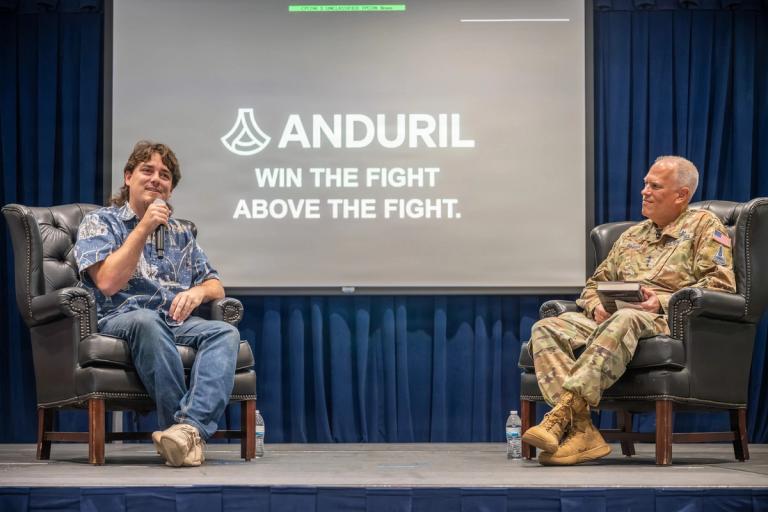
Palmer Luckey, the founder of Oculus and the defence company Anduril, is building a seastead called SLAB. It is an offshore platform with a planned design life of 1,000 years, meant to host heavy industry beyond the reach of US state and local law. Luckey revealed the project in a post on X on 18 November 2026, saying he had been developing it since he sold Oculus to Facebook in 2014.
Seasteading has had many thinkers and few builders. SLAB comes from someone who has already built two hardware companies, and it puts one of the oldest ideas in the Free Cities movement back in the news.
What Is Palmer Luckey Building?

Palmer Luckey speaking at the Collision conference in Toronto in 2019. Credit: Stephen McCarthy / Collision
In his post, Luckey wrote that the goal was "to be cheaper than land and absent state/local laws that cripple critical American industries like metal processing, medical research/treatment, desalination, oil refining, chemical engineering, and more." He added that he and "a few close friends" funded the project at a $1 billion valuation back in 2017, and that it "still has a long way to go".
Luckey said he was speaking about SLAB now because reporters had learned that he and his friends were "topping up the coffers" and planned to call it his "new floating AI datacenter project". He rejected the label, writing that SLAB is "way cooler than that, way older than that".
Much remains unknown. Luckey has not said where SLAB will be, how large it is, what it will cost or when it might open, and the $1 billion figure is his own description of a private funding round. The picture that accompanied his announcement is an AI-generated illustration.
What Is Seasteading?
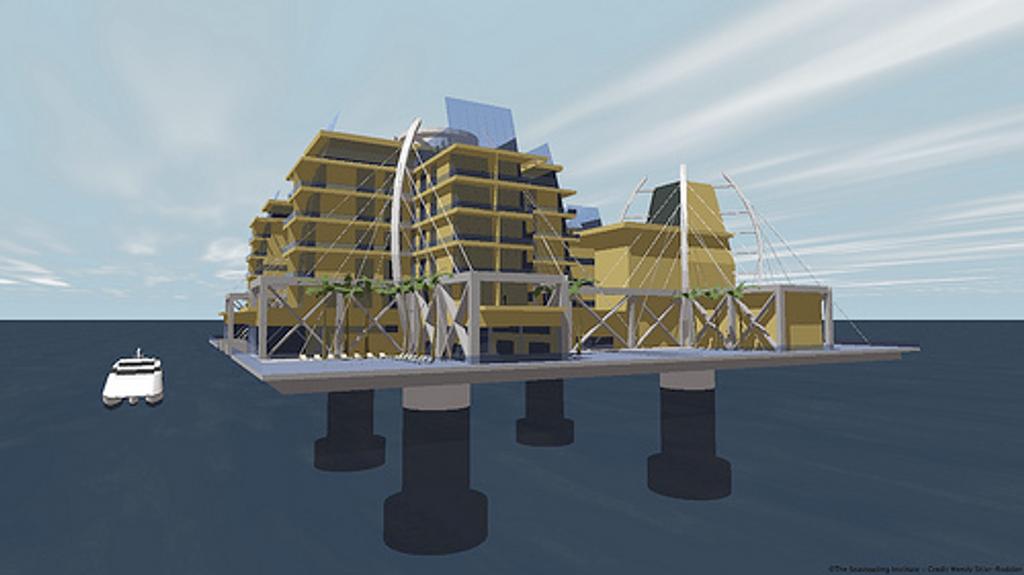
ClubStead, an early seastead design study published by the Seasteading Institute in 2009. Credit: The Seasteading Institute
Seasteading means building permanent homes, workplaces or whole communities on the ocean, usually on floating platforms, with the aim of living under new rules. The word was popularised by the Seasteading Institute, founded in 2008 by Patri Friedman and Wayne Gramlich with early funding from Peter Thiel.
The idea behind it is close to our own. Seasteaders argue that if a community can simply float away from a government it dislikes, governments will have to compete for residents by governing well. Friedman called this dynamic geography. Free Cities pursue the same goal of competitive governance on land, by agreement with a host country.
A Short History of Seasteading
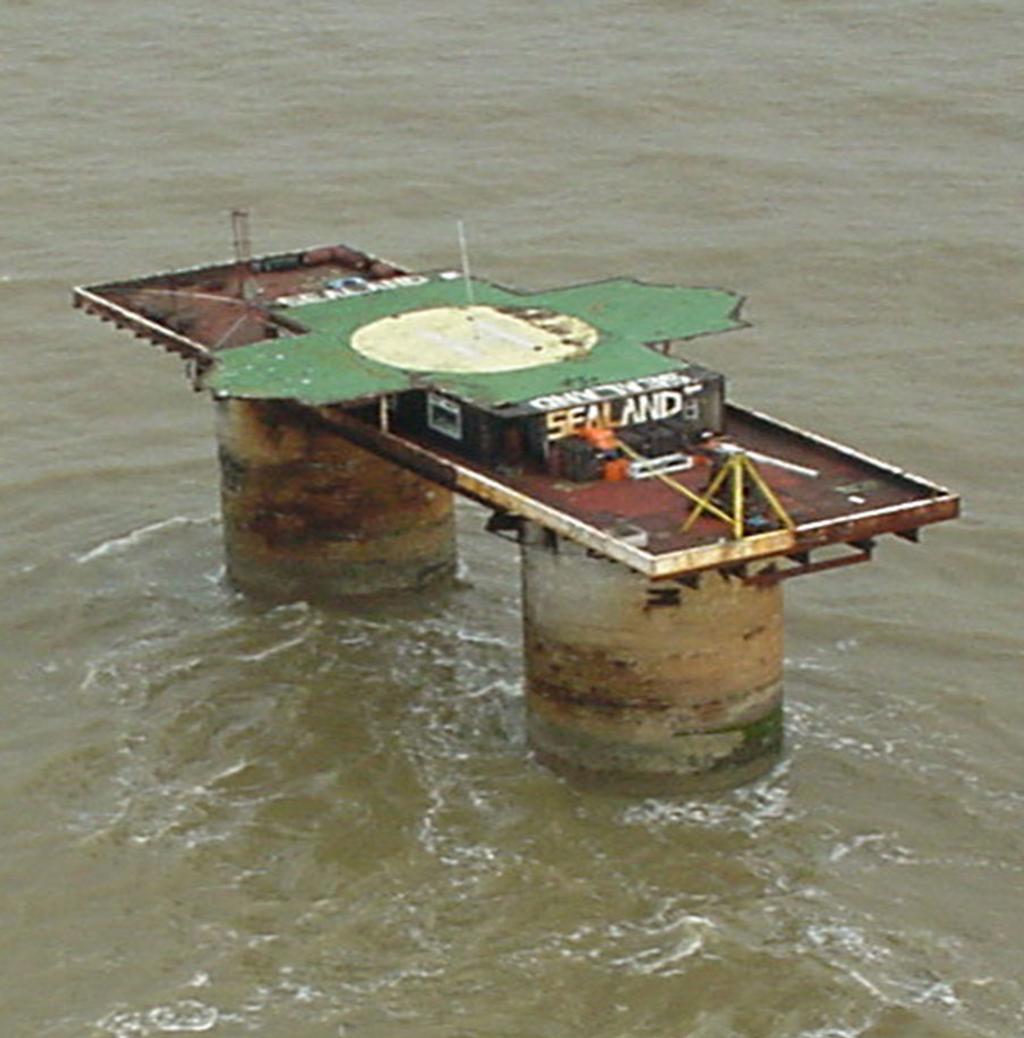
The Principality of Sealand, a former sea fort off the English coast, seen from a helicopter in 1999. Credit: Ryan Lackey
The best-known ancestor of the movement is the Principality of Sealand, a Second World War sea fort off the English coast that Roy Bates occupied in 1967 and declared independent. In 1972, the property developer Michael Oliver raised the Republic of Minerva on reefs in the South Pacific, only for Tonga to annex them within months.
The modern movement has had similar luck. In January 2017, the Seasteading Institute signed a memorandum of understanding with French Polynesia for a floating island off Tahiti, but the project lost political support and was dropped in 2018. In April 2019, the Thai navy seized a small floating home in the Andaman Sea promoted by Chad Elwartowski and his partner Supranee Thepdet, who were accused of violating Thai sovereignty, an offence punishable by death. The couple went into hiding.
The lesson the movement has drawn from these episodes is that the sea is not empty of states. A seastead near any coast needs the consent of the country next door, much as a Free City needs the consent of its host.
How SLAB Differs
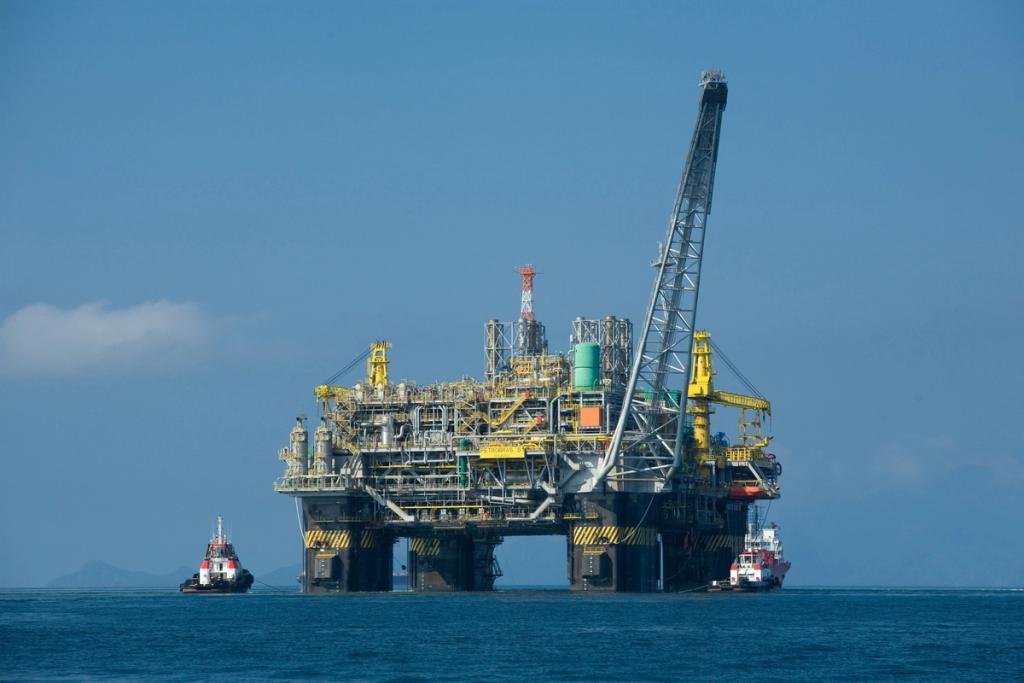
Heavy industry already works at sea: the P-51 oil platform off Brazil, 2009. Credit: Petrobras / Agência Brasil
Luckey sets SLAB apart from this history. "At a time when most of the seasteading community wanted to escape the US and smoke pot," he wrote, "this was the one project explicitly designed to make America stronger, a relief valve for ill considered or outdated rules and regulations." He described SLAB as part of "reviving manifest destiny and westward expansion".
Many seasteaders would dispute that portrait of their community, yet his strategy is worth noting. Luckey's post speaks of escaping state and local laws and says nothing about federal ones. Off most of the US coast, state waters end three nautical miles from shore, and federal jurisdiction takes over. A platform beyond that line could leave a state's permitting and zoning behind while remaining under US law. Lawyers will point out that federal law borrows some state rules for fixed offshore installations, so the details will matter.
Seen this way, SLAB resembles a special jurisdiction that works with its host country, which is the model most Free Cities follow.
What SLAB Says About Competitive Governance
The most striking part of the announcement is economic. One of America's most successful hardware founders believes it may be cheaper to build a platform meant to last a thousand years in the open sea than to build refineries, metal works and laboratories on land. Whether or not he is right, the calculation says a great deal about the cost of permits, zoning and litigation onshore.
The United States deserves credit for what it still offers: capital, engineers, courts that investors trust and the world's largest market. These are the reasons Luckey wants to stay close to home. The friction he describes sits mostly at the state and local level, and when a jurisdiction makes building hard, builders look elsewhere, in this case a few miles offshore. That is competitive governance at work. On land, Free Cities offer a similar choice. Próspera in Honduras, for instance, has attracted biotech and medical companies that value its clear and predictable rules.
Questions remain. Critics doubt that ocean megastructures can be built and insured at a reasonable cost, and some worry that moving industry offshore could weaken safety oversight. These are fair concerns, and SLAB will have to answer them with sound engineering and transparent rules.
We hope it does. Seasteading has waited a long time for a builder with deep pockets and a practical purpose. If SLAB succeeds, it will give everyone working on new jurisdictions, on land or at sea, a real-world test of how much better governance can achieve.