
Monaco Explained: How the World's Safest Tax-Free Microstate Really Works
 Titus Gebel · Free Cities Foundation
In short: Monaco is a 2 km² constitutional monarchy of about 38,000 residents, ruled by the Grimaldi family since 1297. It levies no income, inheritance or capital gains tax and is funded mainly by VAT, corporate and property taxes. It keeps crime low with one police officer and one camera for roughly every 70 residents, and it screens and renews residence permits year by year. Titus Gebel argues that competition with other places, more than its constitution, keeps it that way.
Monaco is the world’s second-smallest country; a two-square-kilometre principality on the Côte d’Azur with no income tax, the lowest crime rate on earth, and the most expensive property market anywhere. How does it manage all three at once? The answer lies in a government that treats its residents as customers.
An Austrian who had moved to Monaco recently told me the following story. About four weeks after his arrival, a friend invited him to an event at the Monaco Yacht Club. There he fell into conversation with a man who questioned him at length about his experiences during his first weeks in the country. When he finally asked why the gentleman was so interested, the man replied: ‘I am the President of the Monegasque Parliament, and you are, after all, our customer.’ My interlocutor admitted he was at first quite taken aback by this way of looking at things, but on reflection, he came to appreciate being regarded as a customer. And it is precisely this self-image — that of a service provider which must strive to keep its clients satisfied — that makes Monaco so successful. Let us therefore take a closer look at the Principality.
The History of Monaco: From Grimaldi Conquest to Sovereign Microstate
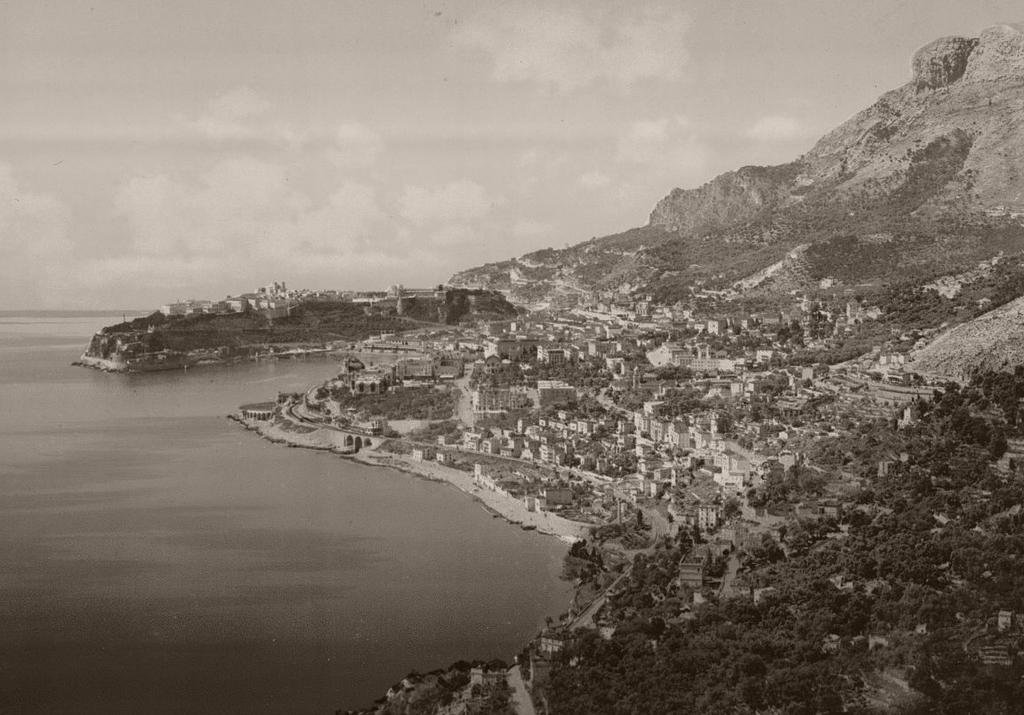
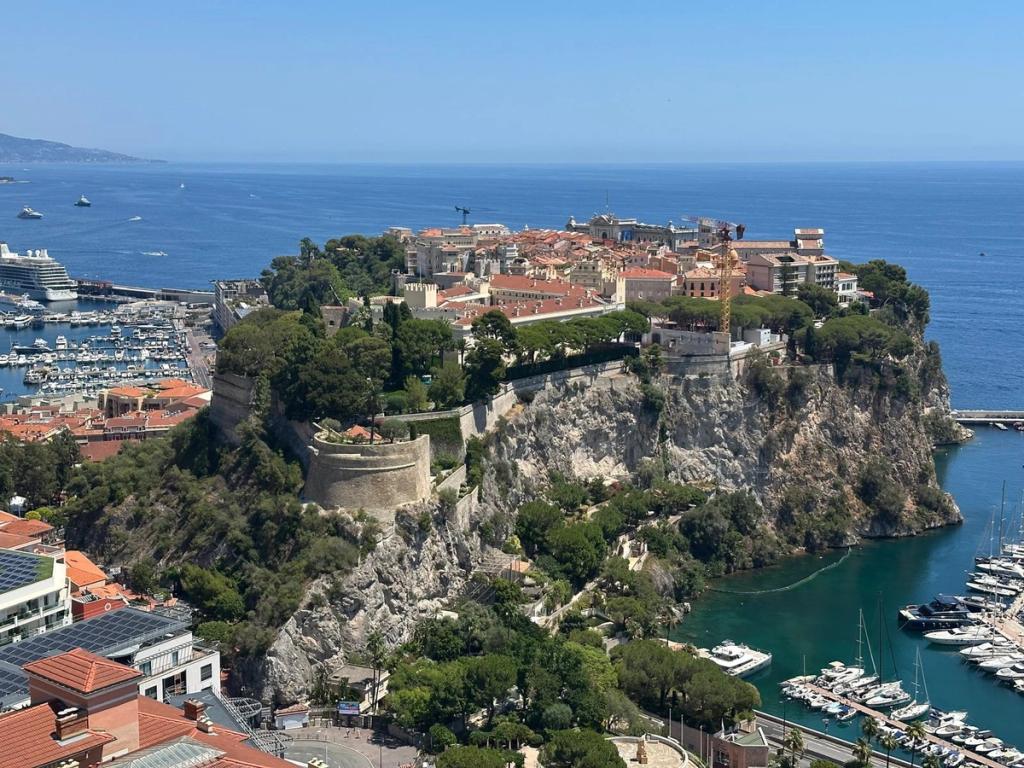
The civil-war-like conflicts between the Ghibellines and the Guelphs in northern Italy led in 1296 to the expulsion from Genoa of the pope-loyal Guelphs, and with them the Grimaldi family. On 8 January 1297, the Grimaldi managed by a ruse to gain entry to the fortress of Monaco, until then in Ghibelline hands, and seized it with their troops in a swift coup. Ever since, the Grimaldi family has ruled Monaco, with only brief interruptions under foreign occupation. In 1489, Monaco’s independence was formally recognised by both the King of France and the Italian Duke of Savoy. That independence was called into question time and again in the centuries that followed, frequently by France, which today surrounds Monaco on three sides. Nowadays, Monaco’s sovereignty, including its coastal waters, is generally recognised, and in 1993 the country joined the United Nations. Since 1865, the Principality has been in a customs union with France, through which it also participates in the EU market, though it is not itself a member of the European Union. Monaco uses the euro as its currency and has been granted the right by the EU to mint a certain number of coins of its own.
Since 1911, when a constitution was introduced, the Principality has been a constitutional monarchy. Freedom of expression, property rights, and so forth are constitutionally guaranteed. The Prince appoints the government. Since the constitutional reform of 1962, there has been a parliament, elected for five-year terms in free elections by secret ballot. The Prince, however, holds a veto over parliament’s legislative proposals and may propose laws of his own. Monaco is thus one of the few states in which a monarch still actually steers the country’s fortunes.
Monaco’s Economy: A Country with More Jobs than Residents
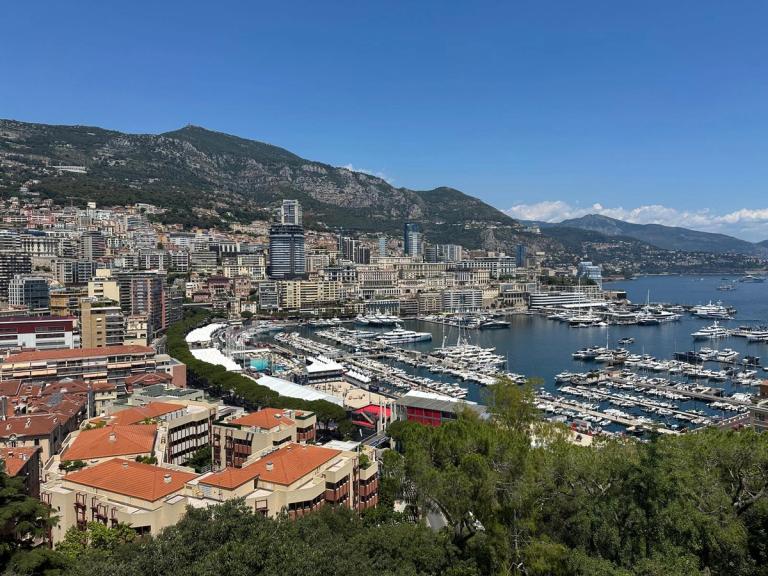
Monaco is a microstate covering a mere two square kilometres; only Vatican City is smaller. It is home to 38,000 people, making it the most densely populated country in the world. More people work in the Principality than live there; some 50,000, most of them daily commuters from France or nearby Italy. Employees enjoy essentially the same rights and social protections as in France, and there are even welfare recipients living in government housing. It is said that 30 per cent of Monaco’s residents hold liquid assets of more than one million US dollars. Which means, conversely, that the other 70 per cent are more or less ordinary people. Over the years, I have spoken with many of those who work in Monaco, most of them commuters from France and Italy, and the finding is unambiguous: were rents not so exorbitant, almost all of them would prefer the Monegasque system and settle in Monaco. Property prices are only so high because Monaco has so little land; the general cost of living is comparable to the rest of the Côte d’Azur.
Monaco and France: A Special Relationship
Despite its formal recognition as a sovereign state, Monaco’s relationship with France occupies a special position, one which in certain respects constrains its independence. Over the centuries, Monaco has concluded several treaties with France defining their mutual relations, and it was by treaty that the last great crisis between the two states was resolved. In the early 1960s, growing numbers of French companies and private individuals had moved their seat to tax-free Monaco even though they earned the bulk of their income in France. France, thereupon, demanded that Monaco subject all of its residents and companies to French taxation. The compromise finally reached in 1963 provides that persons holding French citizenship who had not already been living in Monaco before 1962 pay their taxes to France. Monaco, moreover, adopts the prevailing French VAT rate and remits part of its VAT receipts to France. The Principality further undertook to exercise its sovereign rights in a manner that safeguards France’s economic and political interests, which includes denying entry to persons unwanted in France. In return, France assumes responsibility for Monaco’s external security.
Monaco Tourism and Culture: The World’s Most Expensive Real Estate
With its wealth of cultural, culinary, and sporting offerings, combined with its civility, its history, its glamour, and its reputation as the home of the rich and beautiful, Monaco may well be regarded as a culmination of European high culture. There is no shortage of critics, but tourists and day visitors stream in regardless, and demand for housing exceeds supply many times over, which is why property prices there are the highest in the world.
Why Monaco Has No Income Tax
Monaco is considered the country with the lowest poverty rate and the highest life expectancy in the world. Yet as late as the mid-nineteenth century, Monaco was poor; at one point, its population had dwindled to a mere 300 souls. Only the opening of a successful casino and the arrival of the railway in 1868 brought the turnaround. When, in the years that followed, annual casino revenues came to finance 95 per cent of the state budget, the reigning Prince decided to relieve his subjects of taxation altogether. In principle, that is how it has remained to this day. Monaco levies neither income nor inheritance taxes nor taxes on capital gains. Companies that earn the bulk of their income outside Monaco do, however, pay corporate taxes, and there is also a property tax and a property transfer tax, along with the aforementioned VAT, which today finances roughly half the state budget. Revenues from state casinos and hotels now play only a minor role (around 5 per cent); the remainder is funded by corporate taxes, property taxes, and other levies. The budget shows a slight surplus, and Monaco is not only free of debt but holds liquid reserves worth more than two annual budgets.
How Monaco Achieves the World’s Lowest Crime Rate
Around 80 per cent of the population are foreigners without Monegasque citizenship; people from 139 nations live together peacefully. Monaco has the lowest crime and poverty rates in the world, without border controls, and despite tens of thousands of commuters and just as many visitors every day. How is that possible?
The Principality has the highest police density per capita in the world and monitors its entire territory with cameras: there is one police officer and one video camera for roughly every 70 residents. The police force numbers 520 in total, supplemented by an equal number of private security personnel and two paramilitary units: the palace guard and the fire brigade. Given that the built-up area merges seamlessly into the neighbouring French communes, and given the heavy traffic, border controls in the proper sense would in any case be difficult to carry out. Instead, Monaco monitors incoming vehicles with number-plate readers and visual checks by police officers posted on the access roads. Suspicious persons are picked up by the camera surveillance and then checked by officers on patrol.
Monaco Residency Requirements: Who Gets to Live in the Principality
Monaco also takes a close look at who it admits as a resident. Anyone wishing to settle in Monaco must be entitled to reside in France, provide proof of accommodation in Monaco (rented or owned), possess sufficient income or assets to support themselves, and submit, for every adult family member, a curriculum vitae and a police clearance certificate from their country of origin. On this basis, an internet search is conducted, and a personal interview is held with a police officer. If no concerns arise, Monaco grants a residence permit for one year initially, renewable twice for a year at a time, before a three-year permit is issued, and so on. This gives Monaco the option, when a newcomer proves dubious or attracts unwelcome attention, of simply declining to renew the permit rather than fighting protracted legal battles over the revocation of a residence entitlement. Towards crime, Monaco shows no tolerance at all. Convicted non-Monegasques must leave the Principality (after serving a prison sentence where applicable) even for minor offences such as shoplifting. It is the combination of all these measures — the camera surveillance, the strict immigration rules, the deportation of criminals, and the strong police presence — that allows parents in Monaco to send their children out into the street without a second thought, even at midnight.
Why Competition, Not Democracy, Keeps Monaco Free
Although the Principality grants non-Monegasques no political participation rights whatsoever, there are more people wanting to move in than its small housing market can hold, which is why new land is being wrested from the sea. Why should that be? Freedom from taxation, after all, can be had elsewhere. The answer is that Monaco offers security from crime, near-complete freedom from taxes, rules one can actually keep track of, a fine climate, and no small amount of glamour. In short, Monaco is attractive, and it leaves its residents in peace. The day Monaco adopts the full body of EU regulation, income taxes included, the Monaco business model is finished. Most residents would simply move away. The Prince knows this, and that is why it will not happen. Despite his formally vast powers, it is thus competition with other places alone that secures the residents’ freedom — not a parliament, not a constitution, not the right to a referendum. Competition is indeed the only durably effective means of disempowering rulers that humanity has yet discovered. And this is true in Monaco, too.
This post is an amended version of an article originally published in German in 2021.
Common questions about Monaco
Does Monaco have income tax?
No. Monaco levies no income, inheritance or capital gains tax. Under a 1963 agreement, French citizens who were not living in Monaco before 1962 pay tax to France, and companies earning most of their income outside Monaco pay corporate tax.
How does Monaco fund its government?
VAT provides roughly half the budget. Casinos and state hotels now contribute only about 5%, and the rest comes from corporate tax, property taxes and other levies. Monaco has no debt and reserves worth more than two annual budgets.
How do you become a resident of Monaco?
Applicants need the right to reside in France, housing in Monaco, enough income or assets, and for each adult a CV and police clearance, followed by a police interview. Permits are issued for one year and renewed twice before a three-year permit.
Who rules Monaco?
The Prince, from the Grimaldi family, who appoints the government and can veto laws passed by the elected parliament. For the family's history, see Monaco: A State Owned By A Family.