

Yes, Paraguay is still one of the easiest places in the world to get residency and tax residency, but it is harder than it was. Since 2022 permanent residency requires two years of temporary residency first, and since July 2026 applicants must also prove real income. In November 2026 the collapse of Ueno Bank and the removal of President Santiago Peña added political risk. This guide sets out the rules as of November 2026.
| Paraguay residency at a glance (November 2026) | |
|---|---|
| First step | Temporary residency, up to 2 years, with a cédula (national ID card) |
| Permanent residency | After temporary residency; files from 6 July 2026 must prove income-generating activity |
| Shortcut | Investor Pass: direct permanent residency for US$200,000 in property or securities |
| Tax on foreign income | None (territorial system) |
| Tax on Paraguayan income | Up to 10% for individuals |
| Minimum stay for tax residency | None, but the tax office asks for the year's migration record |
| New reporting | Crypto transactions above US$5,000 a year, from tax year 2026 |
| Residencies granted, first half of 2026 | 29,765, up 81% on a year earlier |
This page is general information, not legal or tax advice. The rules have changed several times since 2022, so check with a licensed Paraguayan adviser before you apply.
How Paraguay residency works in 2026
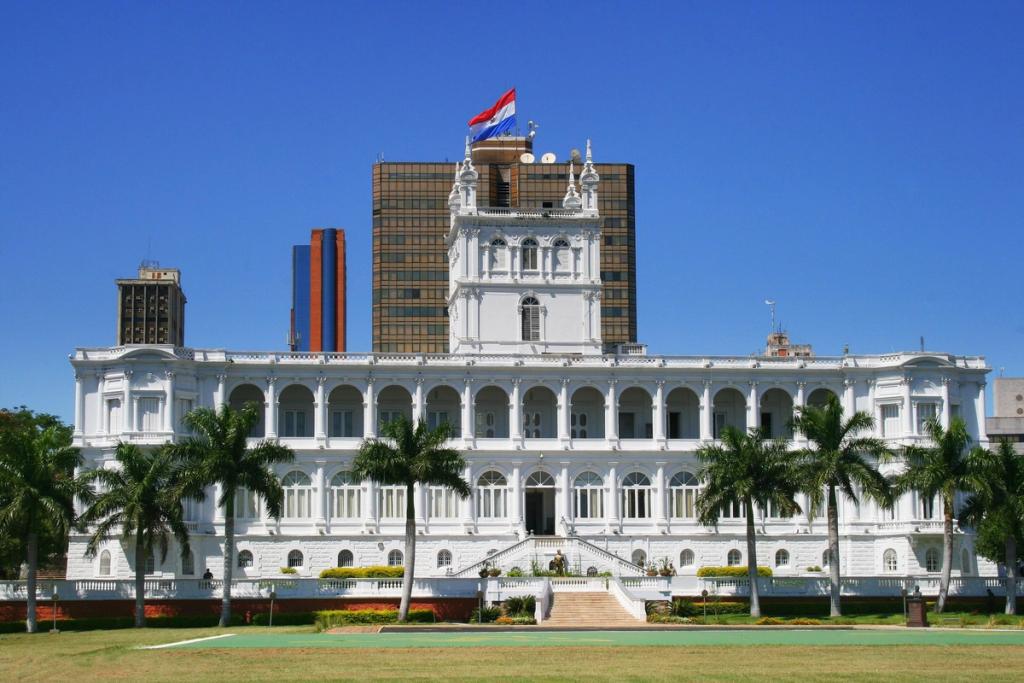
Palacio de los López, the seat of government in Asunción. Credit: FF MM
Under the old migration law of 1996, a foreigner could apply for permanent residency directly, usually by showing a modest local bank deposit. The Migration Law of 2022 (Law 6984) ended that shortcut. Most applicants now start with temporary residency for up to two years, which comes with a cédula, and can then apply for permanent residency.
From 6 July 2026, permanent-residency applications must show genuine economic activity that generates income, for example social-security registration, a registered work contract or real VAT returns. A university diploma or zero-filed tax returns no longer count. Absences of more than 365 consecutive days during temporary residency are now strictly enforced.
The Investor Pass, launched in April 2026, skips the temporary stage. It grants permanent residency for US$200,000 in real estate or securities, US$150,000 in tourism, or US$70,000 in a productive business that creates five jobs.
Paraguay's tax system for residents
Paraguay taxes on a territorial basis. Income earned abroad is not taxed, and Paraguayan-source personal income is taxed at up to 10%. A tax residency certificate needs no minimum number of days in the country and no wealth threshold, although the tax office asks for the applicant's migration record for the year. That combination is rare and is the main reason Paraguay became a favourite plan B.
The tax office is tightening reporting. Residents and companies must report crypto transactions above US$5,000 a year, with the first report due in March 2027. Paraguay has also decided to move towards the international Common Reporting Standard for exchanging bank account information, and its tax office has signed a data-sharing agreement with the banks. No change to territorial taxation itself has been announced.
Ueno Bank and the fall of President Peña
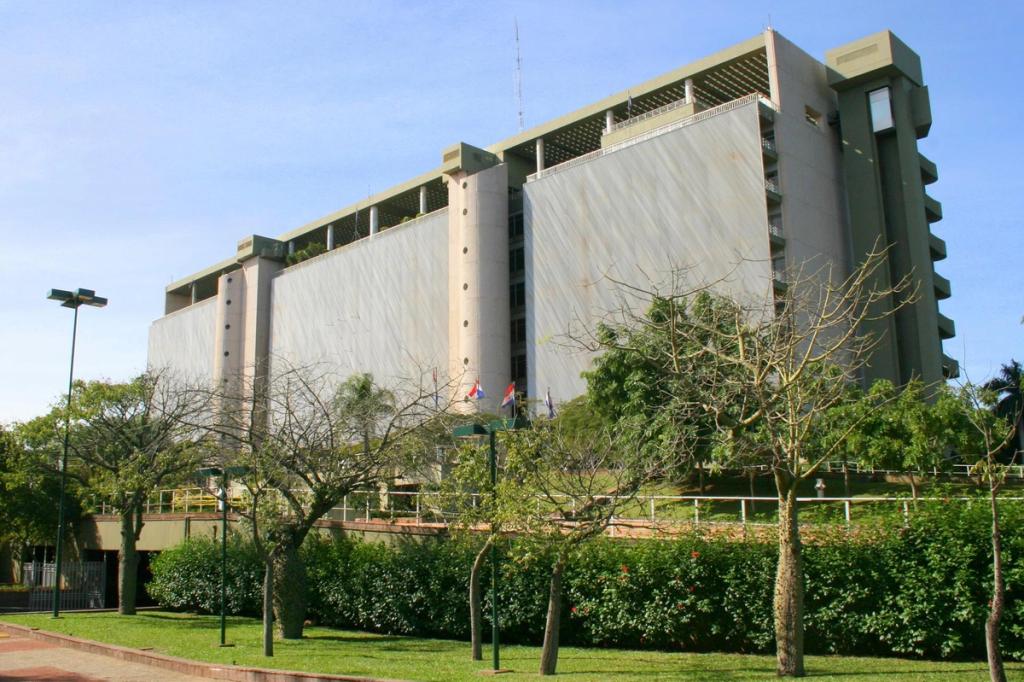
The Central Bank of Paraguay, which closed Ueno Bank on 2 November 2026. Credit: FF MM
On 2 November 2026 the Central Bank of Paraguay revoked the licence of Ueno Bank, a fintech that had grown into one of the country's largest lenders with around three million customers. It had lent heavily to companies linked to its own owners. President Santiago Peña, who had held shares in the bank's predecessor and had appointed its former president to head the central bank, was impeached 78 to 0 by the deputies, removed 44 to 0 by the Senate and arrested. He denies wrongdoing.
Vice President Pedro Alliana, a long-time Colorado Party insider, was sworn in on 6 November and serves until August 2028. By 11 November about 95% of savers had been repaid through the deposit guarantee, and analysts at Capital Economics saw no sign of a wider risk to the banking system. Larger depositors were not fully covered.
What it means if you are considering Paraguay
- The core offer is intact: territorial tax, a cédula and tax residency without a minimum stay.
- The path is longer and needs paperwork: plan for two years of temporary residency and documented income, or use the Investor Pass.
- Keep your migration record clean, because border records are now checked more closely.
- Spread risk. Ueno showed that even a stable host can have a bad month, so do not hold all your savings in one local bank.
- Compare alternatives. Each new requirement narrows the gap with Uruguay and Panama.
Why Paraguay matters for Free Cities

A Mennonite farmer near Lolita, in the Chaco. Credit: Elton Núñez
Paraguay has competed for people before. In 1921 its Congress passed Law 514, which gave Mennonite settlers freedom of worship, German-language schools, a large degree of self-administration and exemption from military service, in return for developing the largely empty Chaco. Between 1926 and 1927, 1,745 Mennonites arrived from Canada and founded Colonia Menno, and their cooperatives turned the region into one of the country's most productive.
That is an early example of what the Free Cities movement calls the bottom-up path: a community earns autonomy by bringing real value to its host state. The modern residency boom is the same idea applied to individuals. When people can choose where to live and under which rules, governments have to earn their residents. Paraguay was rewarded for offering better terms than its neighbours, and it will lose ground to whichever country offers better terms next. For more on how jurisdictions compete for residents, see The Future of Citizenship and Residencies.
Common questions about Paraguay residency
Can you still get permanent residency in Paraguay directly?
Only through the Investor Pass, from US$70,000 in a job-creating business or US$200,000 in property or securities. Everyone else starts with up to two years of temporary residency.
Does Paraguay tax foreign income?
No. Paraguay taxes only income from Paraguayan sources, at up to 10% for individuals.
Do you have to live in Paraguay to be a tax resident?
There is no minimum number of days, but the tax office asks for your migration record when it issues a tax residency certificate.
Is Paraguay still safe for savings after the Ueno Bank collapse?
The wider banking system was judged sound, and about 95% of Ueno savers were repaid within ten days. Larger depositors were not fully covered, so spreading savings across banks and countries is sensible.
Who is the president of Paraguay now?
Pedro Alliana, sworn in on 6 November 2026 after Santiago Peña's removal. His term runs to August 2028.
Sources
- Law 6984/2022 explained, ABC Color, 24 October 2022
- Paraguay ties long-term residency to active income, IMI Daily, 12 July 2026
- Immigration and tax residency in Paraguay, NVC Abogados
- Paraguay residency 2026 figures, Liberty Mundo
- Crypto reporting obligation, DNIT
- Paraguay strengthens tax transparency, DNIT, 12 June 2025
- 2026 Paraguay banking crisis, Wikipedia
- Peña under arrest, Alliana sworn in, Al Jazeera, 7 November 2026
- Paraguay bank collapse tests LatAm's credibility, Global Finance
- Law 514 and Mennonite immigration, ABC Color, 27 June 2022