Freedom Villages for Nomad Families – Rahim Taghizadegan Presents Citadel Garden
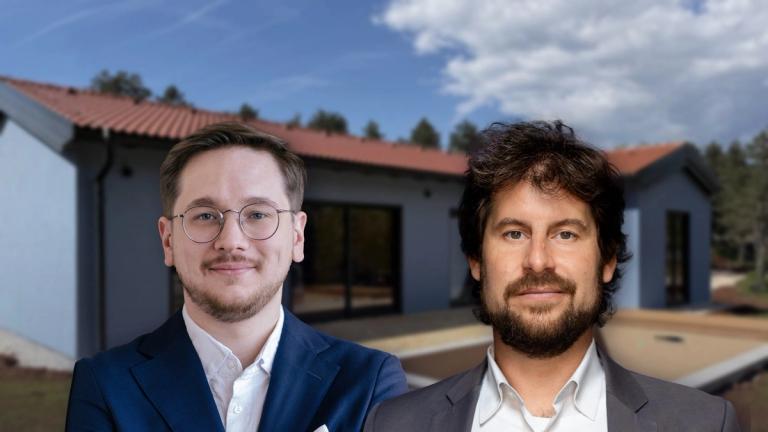
 Jan Bertram · Free Cities Foundation
What if your family had a network of safe places across Europe, with like-minded neighbors, friends for your kids and real continuity, without giving up the freedom to move? That is the idea behind Citadel Garden, the new project of economist and former Free Cities Foundation president Rahim Taghizadegan.
"I don't know what Europe looks like in five, ten years from now. So it's good to know that if I need it, there's a network of safe places with like-minded people."
The project has been in preparation for a long time and has only recently gone public. We sat down with Rahim at a lakeside campground in eastern Germany to talk about family-centric villages, a rotation model for location-independent Europeans, an accredited boarding school, and why he finances it all through a Bitcoin treasury instead of buying land. Watch the full conversation below, or read on for the background, the highlights and the complete transcript.
Behind the Scenes: Afuera Fest 2026
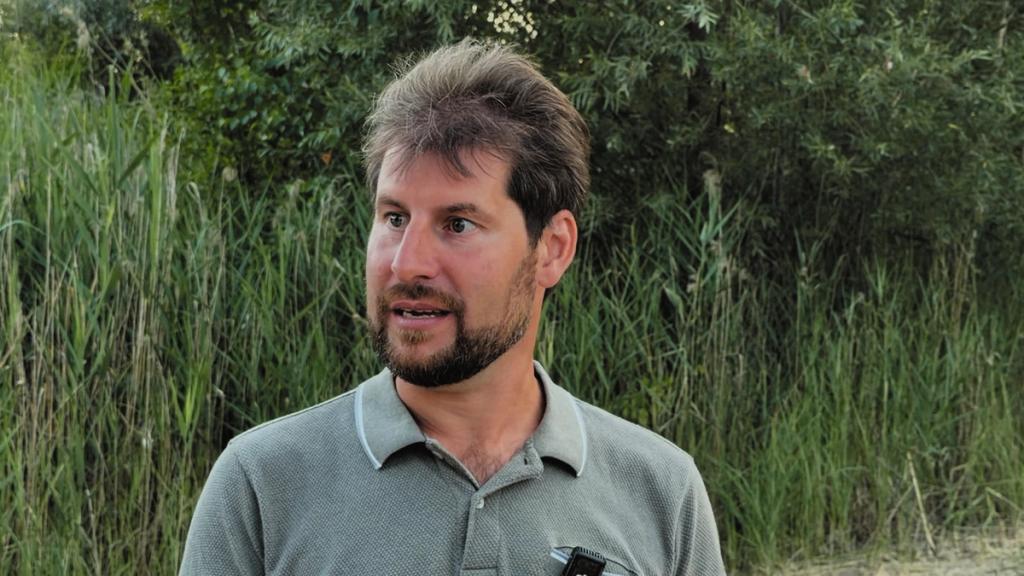
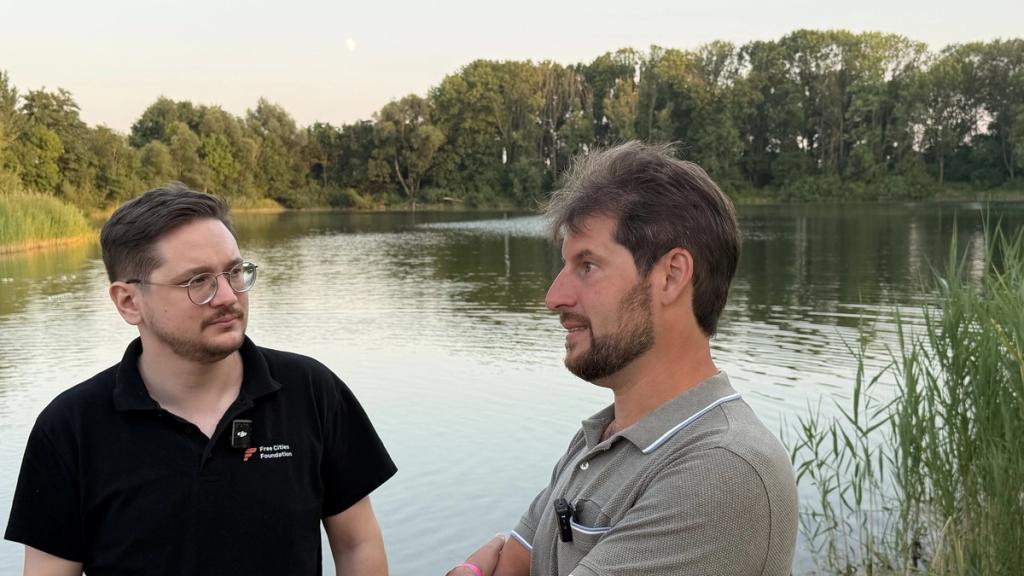
The interview was recorded at Afuera Fest 2026, which took place from 24 to 26 July 2026 at Strandbad Gerlebogk in Saxony-Anhalt, Germany. The lake you see behind Rahim and the reeds around him are the festival grounds: a lakeside bathing beach and campground that, for one weekend, turned into a meeting place for the German-speaking liberty movement.
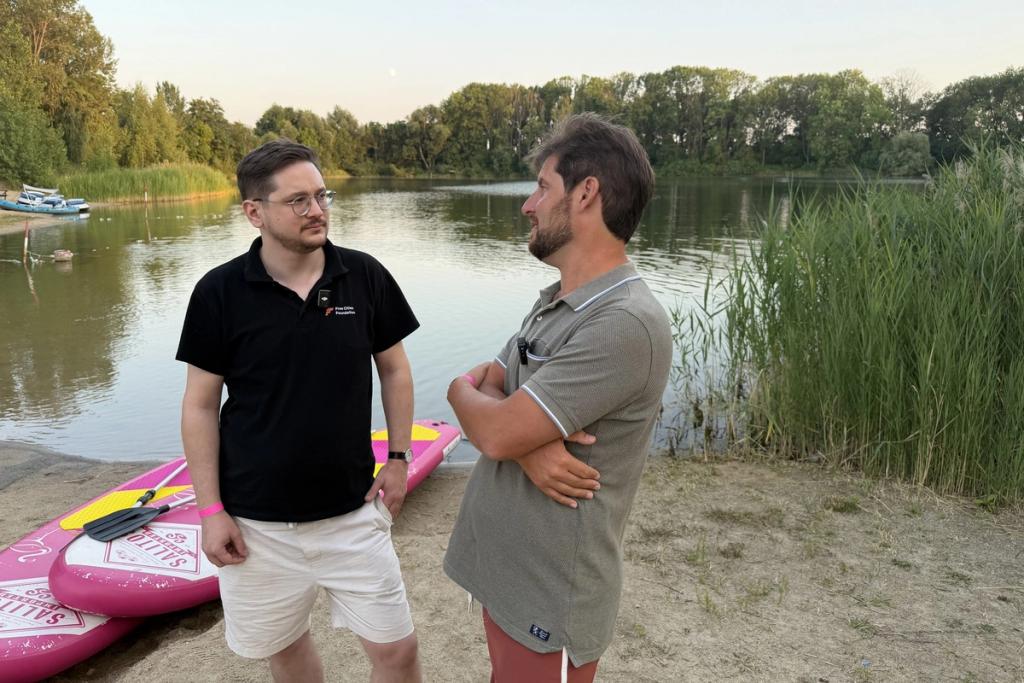
The Free Cities Foundation was there all weekend, together with a long list of libertarians, Bitcoiners, entrepreneurs and writers. What made the weekend special was its atmosphere: no stage formalities, but long conversations on the beach, at the campfire and over dinner between people who think about freedom not only in theory but in how they want to live.
Community was one of the topics that kept coming up. How do you find like-minded people when you live location-independently? Where do your kids grow up? Where do you go if things get worse at home? This interview grew directly out of those conversations.
Who Is Rahim Taghizadegan?
Rahim Taghizadegan is an Austrian-school economist and the founder of scholarium, an independent institute for economics and philosophy based in Vienna. He has written numerous books on economics, money and entrepreneurship, and is a familiar voice in the European Bitcoin community.
Rahim served as president of the Free Cities Foundation and has spoken at our events many times over the years, often about exactly the two themes that come together in his new project: Bitcoin and community. In 2023 he already joined us for a conversation on Bitcoin Citadels, Geopolitics & CBDCs.
We are glad that Rahim now has something concrete to announce and is taking the project public.
Interview Highlights
From Free Cities to Citadel Garden
One lesson Rahim took from his time at the Free Cities Foundation: special economic and administrative zones create the most value for people who are stuck in places without much development. Westerners already have something those people lack, a passport that lets them choose where to live. For Europeans, he argues, the better path to more liberty is not to be residents of one place but to be perpetual travelers. "Most countries treat their citizens much worse than they treat visitors," he says, "because visitors come voluntarily, may not come back, and may not invest in a place that doesn't treat them well."
Nomad life with kids: when the children start nagging
Becoming a digital nomad is easy as a single person. Starting a family or a company that needs continuity is not. More and more European families travel the world to escape dysfunctional school systems and tax regimes, but after a few years the children start missing stable friendships and the leisure, sports and education that a fixed location provides. Rahim puts it plainly: "I'm an introvert myself, I don't need that much community, but children need it."
Family villages for the European middle class
"It's not an entirely new invention, nothing very radical," Rahim says. "It's a lifestyle very wealthy families already have." A summer home, a winter home and more: Citadel Garden wants to make that workable for the European middle class. The minimum scale is 25 families across the network, so that children have other children around and can roam freely in a safe place, close to their parents. Families can rotate between locations: stay permanently, come for the holidays, or move seasonally every three months.
Unschooling and an accredited boarding school
Shared needs of the families can be organized together, and education comes first. Many of the families already practice unschooling, and every location has workshops, hacker spaces and agriculture. "We have one of the best woodworkers in Europe," Rahim says. When we spoke in July, Citadel Garden was in the process of acquiring a fully accredited boarding school in Europe, which can provide accredited, location-independent education, for example for a term or two. The project now lists an established IB school among its secured locations.
Croatia, Madeira and a third location not yet named
The first location is in Croatia, reachable by car from central Europe, with three countries and the sea within 30 minutes. "I've regretted starting in Croatia many times," Rahim says, "but it came from a strategic approach." The next is Madeira, which Rahim describes as the only special economic zone in the EU. The third, in Europe outside the EU, has not been named yet. Further locations are planned in the Western Hemisphere and in Latin America, with Asia and Africa being scouted. The long-term idea: three months a year at home, six months in European locations and three months outside of Europe.
"For myself and half of our shareholders, it's a kind of Plan B, life insurance."
How a Bitcoin treasury finances the villages
Many people buy a second house or a plot of land as their Plan B. Rahim thinks that is a mistake: "It doesn't make a lot of sense to sell liquid assets to buy the most illiquid thing possible, a plot of land somewhere, just for the chance that you may need it and manage to get there in time." Instead, Citadel Garden is structured as a Swiss holding company and private Bitcoin treasury. It keeps its Bitcoin, uses it as collateral and finances the real estate with a short euro position. Shareholders are co-owners of all locations and get exclusive usage rights through a reservation system.
Rahim is explicit that he does not promise returns: the main value is peace of mind, the network of people and more options every year. "In the best case, I never need it, and I'm very happy."
Why We Are Featuring Citadel Garden
Citadel Garden is now listed in the project directory on our website. The Free Cities Foundation wants to support projects like this one: places where freedom-oriented people come together and form new kinds of communities.
Not every path to more freedom runs through a new jurisdiction. Citadel Garden takes a deliberately realistic approach. It does not pick jurisdictions or try to change local politics, but builds a network of good places that families can use as a home base and a Plan B. We are glad to see this idea take shape in Europe, and we look forward to following the project as it grows.
Links
Full Interview Transcript
2,964 words
The following transcript has been lightly edited for readability. Jan Bertram interviews Rahim Taghizadegan for the Free Cities Foundation at Afuera Fest 2026 in Gerlebogk, Germany.
Jan Bertram: Hello. Today I'm here with Rahim. Rahim is the former president of the Free Cities Foundation, but today we want to talk about his new project, because Rahim has become active in the Free Cities movement with his own community project based in Europe. Rahim, welcome. Please tell us a bit about what you are doing with your new Citadel Garden project.
Rahim Taghizadegan: One of the learnings from the Free Cities Foundation was that most of the value of the special economic zone or special administrative zone approach goes to non-Westerners: people who live in countries that haven't had much economic development, who aren't that mobile, who are stuck in one place. For them there is great potential for improvement. Westerners already have something those people don't have: a passport that allows them mobility. We are able to choose locations, and usually we won't go to the places that still need that kind of development.
So I thought for Europeans like myself, the best way to increase and maximize our liberty is to not be residents of one location, but to be perpetual travelers, because that's the way the modern world works. Most countries treat their citizens much worse than they treat visitors, because visitors come voluntarily, may not come back, and may not invest in a place that doesn't treat them well.
That led to the Citadel Garden project. It tries to increase liberty for Europeans, and for European families in particular. As a European, you can become a digital nomad and go anywhere. But if you want to start a family, or a company that needs a bit more continuity, that's difficult, especially the logistics. Still, the pressure in Europe, with decreasing quality of life and increasing regulation and taxation, drives more and more entrepreneurs and families to travel the world just to escape dysfunctional school systems and tax regimes. But usually, after a few years, the children start nagging. They lack continuity in their friendships and the opportunities for leisure, sports and education that a stable location provides.
So what I'm trying to do is set up various places. It's not an entirely new invention, nothing very radical. It's a lifestyle very wealthy families already have. If you're very wealthy, as a European or an American, you buy a second home, a third home, a fourth home. They stay empty most of the year, and you move from your winter home to your summer home. We try to make that workable for middle-class European families and add something else: a minimum economy of scale. We go for 25 families. That seems very small for a village, but it's a huge real estate undertaking.
Why do I want families to settle at the same location? Because then children have other children. I'm not forming communes or anything, but you can be in a place that's safe enough for your children to roam around freely and still be close to you. If you are already location-independent, as more and more Europeans are, that's a way to still provide some continuity. It's not perfect. It's a compromise, and a very entrepreneurial one.
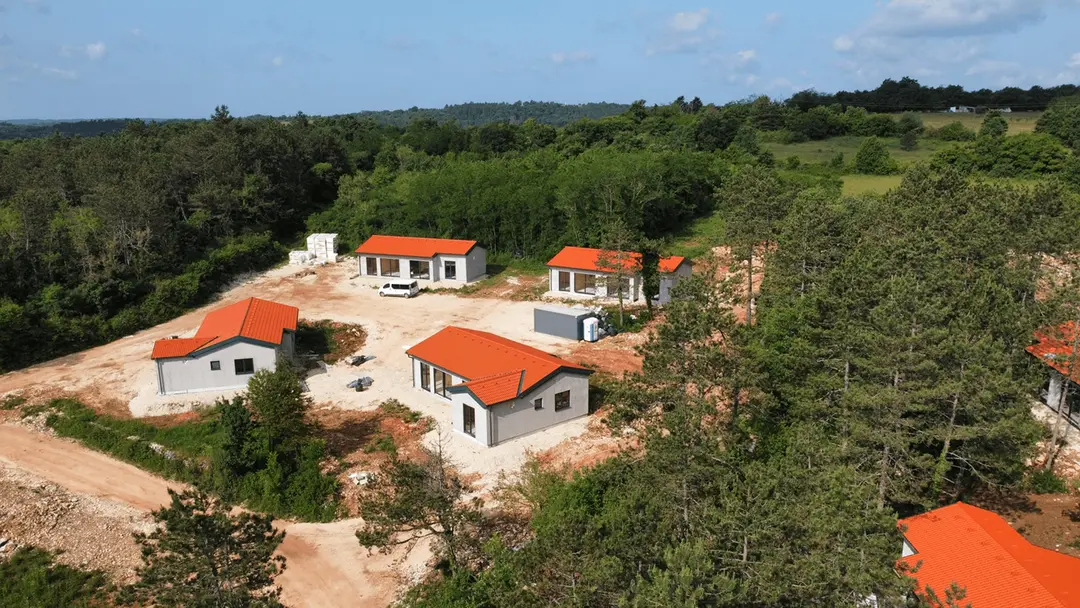
Setting it up needs various locations. We've finished building the first location, and of course it's difficult to build something in the real world. It needs permits, processes, financing, and then you have to build the real estate.
Jan Bertram: So you're essentially building multiple villages, and families will rotate between them?
Rahim Taghizadegan: If they like. I'm not forcing anything, there are just more options. Once we have at least three locations, this rotation becomes possible. I assume families will spontaneously coordinate their movements, but they don't have to. Some families will choose to stay permanently in one location for years, some will just visit for the holidays, and some will move seasonally every three months, together with other families. That's the benefit of a network of many families that we try to bring together.
Jan Bertram: Are you targeting 25 families in total or per village?
Rahim Taghizadegan: Not even per village, because people move. The more families, the better, and the more locations.
Jan Bertram: So if I understand you correctly, you're really focusing on families as your core target audience.
Rahim Taghizadegan: That's the limiting factor. You're not forced to have children. We would like it to be multi-generational: we also have grandparents, not only parents, and people who want to start a family but don't have children yet. And of course, once they are families, others can visit. We always have rooms for visitors. But having a family is the limiting factor. I'm an introvert myself, I don't need that much community, but children need it. Otherwise you're flexible, and on your own it's easier. And it's not that I'm providing you a house somewhere. That alone wouldn't be a unique offer: you could choose any Airbnb or one of mine.
Jan Bertram: But I assume you're doing more, right? If you're focusing on families, I would assume you're at least taking education or kindergarten into account. Tell us a bit more about that.
Rahim Taghizadegan: Yes, of course. It's part of the economies of scale: we have various locations and a certain number of families, so anything that's a shared need of the families can be provided. Education is one of the first aspects. We are right now acquiring a real boarding school in Europe that's fully accredited, which is quite a big undertaking. We can use it to provide accredited, location-independent education, because there is a physical location it's linked to. At a certain age, it may be a good compromise for location-independent parents to send their kids to a boarding school for a term or two. And it's an entrepreneurial boarding school with a freer approach to education.
First, we start with unschooling. A lot of the families already around our locations are into unschooling. That means they want to take responsibility for their children themselves. I think it's best when children can discover the world through play and real life, with their parents around, other kids around, interesting people and interesting opportunities around. We have some great families that bring in a lot of skills. We have one of the best woodworkers in Europe. We have workshops and hacker spaces in all locations, because those are things we as parents are interested in, and we have agriculture in every location. So I think it will be a great combination, of course with digitally enhanced education if you want an accredited diploma. Some parents don't care about that, some do. And the more parents we have over the years, the more options we will have.
It grows with the number of families. And we start with the difficult problems first. Many projects fail because they start with the families: 100 or 25 families try to figure out how to do it on the road, and then you get all the conflicts, because there are so many trade-offs and difficult decisions. So we start with the difficult things first: financing, permits, construction, operations. Then come education, the livelihood of the families, health, nutrition, wellness, anything that's a shared interest of those families. I think that's the way to go. It works out, but it's an incredibly difficult project.
Jan Bertram: In our audience, especially the European audience, people are always asking for opportunities in Europe. And your first location happens to be in Croatia. Tell us a bit more about the first village you're building.
Rahim Taghizadegan: I have a very realist approach. It's not jurisdiction picking. Croatia is an EU member country where I'd say half of the population are very sweet, resourceful people, and the other half are zombies who shy away from any responsibility and are followers. So it's partly that, and partly a very convenient location with a very high quality of life. It's one of the biggest tourist hotspots, the coast is amazing, and we're in a beautiful, very safe location with great value in food and amenities.
But in our whole model, we are not political. We don't intend to change anything there. We pick good places that we think are still safe and provide value, not for people to become residents and tie themselves to one jurisdiction because we claim it's the best one. It's always a trade-off. I've regretted starting in Croatia many times, but it came from a strategic approach. We already have four locations, and we go in concentric circles. We started with something that's reachable by car from Central Europe and still has the positive sides of Europe: three countries within 30 minutes, the sea within 30 minutes. It's a very European thing.
The next location is in the EU, but far enough away that you can go by boat on your own. So it's a safe bubble, I'd say, and the only special economic zone in the EU.
Jan Bertram: Can you already give us the name?
Rahim Taghizadegan: It's Madeira. A very beautiful place with a great climate, and reachable: because it's a tourist location, it has many direct flights and good infrastructure. The next location, which I won't reveal yet, is in Europe outside the European Union. Then comes a location in the Western Hemisphere outside of Europe, and the fifth will probably be in Latin America. We're also scouting Asia, Africa and additional European locations.
Our motivation is for Europeans to be able to spend most of the year in Europe. One model that will become possible over the years: you spend three months of the year at home to maintain your cultural links and your ties to friends and family, about two times three months in European locations, and maybe another three months outside of Europe. And you can shift that around.
For myself and half of our shareholders, it's largely a kind of Plan B, a life insurance. I'm privileged enough to live in a pretty good and safe, but very expensive location. There are a few in Europe that are kind of bubbles. But I don't know what Europe looks like in five or ten years. So it's good to know that if I need it, there's a network of refuges, of safe places with like-minded people and infrastructure, where I don't feel like I'm running away from something. That has much higher value for me than buying a second house or a plot of land somewhere, which for many is their Plan B, and which I think is stupid. It doesn't make a lot of sense to sell liquid assets to buy the most illiquid thing possible, a plot of land somewhere, just for the chance that you may need it and manage to get there in time.
I think the best preparation is, first, saving in liquid assets yourself and good wealth allocation. And second, structures that provide economies of scale, infrastructure, like-minded people, and the peace of mind of having safe places to go to when you need them.
Jan Bertram: For people who are interested in this project and would like to join you now, what would they find? Do you already have an active community? Do you have people living in the village? What is your current development status?
Rahim Taghizadegan: It's not very public, and we don't want it to be. It's meant for shareholders only.
Jan Bertram: But if someone wanted to become a shareholder and join your community, could they just move to the village in Croatia?
Rahim Taghizadegan: The first families have settled in Croatia, and more and more are coming. Families already live on Madeira, even though construction is only starting now. For now they live elsewhere and will move into the location. It's happening that way, and a lot of our shareholders come through families and friends who then join. It's quite a natural process. I was positively surprised that families settled there even though it wasn't ready yet. We had the first events at the location and the feedback was fantastic. Families loved it, and some were eager to live there even though it wasn't finished. It's just a beautiful location.
Jan Bertram: That's good to hear. You already mentioned the shareholders, and it seems that becoming one is a requirement to get in. On the one hand, it's for the middle class, as you said. On the other hand, people have to buy their way in. Give us a bit more detail, also numbers. What are we looking at?
Rahim Taghizadegan: Yes, we take a minimum investment. It's not a typical real estate investment. We are not selling renderings of stuff. It's a holding company where we pool the wealth of people. The minimum per family is about 250K euro or 4 Bitcoin. We have a lot of Bitcoiner families who join, also because it's a private Bitcoin treasury company. We made the choice not to just buy real estate and hold it. Real estate is not a good investment. Generally, we see more upside in Bitcoin. So we keep the Bitcoin, use it as collateral, and finance everything with a short euro position.
It's a bit speculative. It's for Europeans who expect that in ten years the purchasing power of the euro will be relatively low compared to other scarce assets, and that Bitcoin still has quite some upside. We are not unrealistically utopian about anything. It's a very realist, very conservative approach. We weathered quite a strong correction in Bitcoin, which individual families wouldn't have been able to withstand. So it's for people who want to keep the upside of a liquid asset, but also have real ownership of many locations. We find it's a much better deal than giving up 250K to buy a tiny, shabby apartment somewhere in Europe, versus being part of a wealth structure that has significant upside. The real estate component is only a small part of the risk structure. It's not one plot of land that you may not be able to sell, but a portfolio of bigger developments that can be used, can be sold, and hopefully have enough network effect to make it worthwhile.
Jan Bertram: So when people buy shares, what do they get in return? Do they get a house, or do they get access to shared spaces? What does it translate into in reality? Do they have some kind of timed access to certain buildings?
Rahim Taghizadegan: It's a reservation system. We are still pretty early, which is why we offer a pretty low ticket that guarantees a whole year of usage through reservation. And of course, as a shareholder, you're a co-owner of everything. Every real estate component is 100 percent owned by the holding structure, which is based in Switzerland. So you have legal co-ownership of everything and, as a shareholder, a right to exclusive usage of the houses based on the reservation system.
Jan Bertram: That all sounds pretty promising. Before our interview, you also mentioned that you are not only looking for families who want to move to such places, but that it is also a business case, something you are offering as an investment opportunity.
Rahim Taghizadegan: I'm not promising any returns. I think the biggest value is the life insurance, the Plan B, plus the network effect of the amazing people who are part of it, and this very international structure that has economies of scale, allows some geo-arbitrage, and offers more and more options for our shareholders every year. The main intention is to provide value for the shareholders, not as cash flow or dividends, but hopefully as an increase of the capital base and all the possibilities that brings.
I don't intend to move with my family. As I mentioned, we already have a privileged life, so it would be a hard sell. There isn't that much pressure for my family to move somewhere. But I see it as something that combines meaning with a quite value-protected investment. The upside is maybe more peace of mind in a very uncertain time, and over time more and more options for my family as well. In the best case, I never need it, and I'm very happy. And if I do need it, the value would be hard to measure in money.
Jan Bertram: To sum things up: what kind of people do you think should feel most attracted to your project? We talked about families and about people who want this kind of life insurance. What nationalities do you have? Where do you see your target audience in detail?
Rahim Taghizadegan: It started with the German-speaking countries, of course, but it's becoming more and more international over time. We even have non-European shareholders, and that's scaling up as we add more locations. So it's very international. So far, the offer is most attractive for people who have Western passports and that kind of mobility. Otherwise the visa situation is difficult. We can help with that through our structure, there is even an option for a digital nomad visa for non-EU citizens, but that's still a bureaucratic process, and you can't leave for more than 30 days and things like that. So it's easiest for people who are mobile and can visit any place because they have good passports.
Jan Bertram: That all sounds awesome. We hope you'll join our Free Cities Conference at some point to present your project to our core community, who join us every year. Otherwise, we're going to follow your project closely. Thank you for joining us.
Rahim Taghizadegan: Thank you.